A t-shirt business looks simple at first, but many new founders get stuck because they design too many ideas, choose the wrong supplier, or spend money on promotion without a clear brand. That confusion can lead to slow sales and wasted stock. I would start with four things: positioning, production model and supplier, costs and margins, and promotion.
To start a t-shirt business, first define a clear product position and target audience, then build a brand around one lifestyle, belief, or community. Next, choose a production model and reliable supplier that fit your current stage. Before spending heavily on promotion, calculate your real costs and margins. Finally, promote the brand with ads, content, and consistent messaging so people understand why they should buy from you.

I have seen many buyers focus only on the artwork. I understand why. Designs are fun. But the boring parts often decide whether the business survives. A strong idea needs a stable supply chain, clear pricing, and enough marketing to reach the right people.
How do I position my t-shirt business before I make products?
A t-shirt business can fail even with nice designs if the brand feels unclear. Customers do not only buy cotton and printing. Clothing can also communicate identity and how people see themselves[^1]. If your store talks to everyone at once, it often connects with nobody. Clear positioning makes every later decision easier.
Your first step is to choose one target audience and build one brand message around that audience. The brand should express a lifestyle, belief, activity, or identity. For example, you can focus on outdoor lovers, eco-conscious buyers, gym communities, streetwear fans, or young social groups.
Why product positioning matters so much
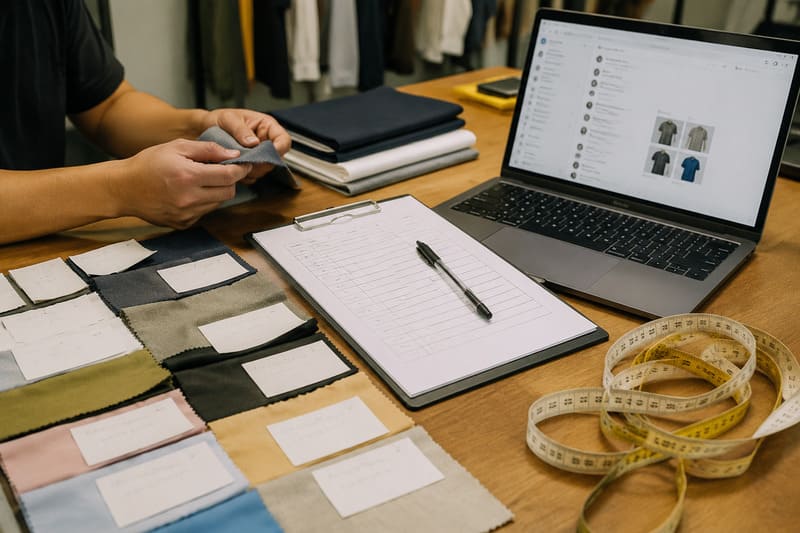
I always tell new brand owners that product positioning is not just a marketing exercise. It affects fabric choice, fit, color, decoration method, packaging, price, and even which supplier you should use.
If you want to sell to outdoor lovers, the product may need:
- Earth-tone colors
- Durable fabric
- Nature-related artwork
- Recycled or organic material options
- Simple, practical packaging
- A calm and natural brand voice
If you want to sell to gym users, the product may need:
- Athletic fit
- Stretch or performance fabric
- Sweat-friendly construction
- Bold graphics
- Strong seams
- More aggressive product photography
Those are very different products. If both concepts sit in one store with no clear story, the customer may feel confused.
Do not mix every idea into one brand
Many founders have many good ideas. That is normal. But I would not put every idea into one store.
For example, if you have:
- A nature-inspired collection
- A funny office culture collection
- A streetwear graphics collection
- A yoga and wellness collection
I would not put all four under the same brand unless there is one very clear connection. Instead, I would consider separate brands or separate stores.
A simple rule helps:
One brand should speak to one main audience with one clear emotional reason to buy.
That emotional reason is important. In today’s market, many t-shirts have similar quality. Many factories can make decent fabric, clean stitching, and nice prints. So if the product quality is similar, the brand meaning becomes more valuable.
Customers buy identity, not only fabric
When a customer buys a t-shirt, they often ask themselves silent questions:
- “Does this feel like me?”
- “Will this show what I care about?”
- “Will my friends understand the message?”
- “Does this brand match my lifestyle?”
- “Do I want to be seen wearing this?”
That is why identity matters. Strong brand equity can make customers less price-sensitive and more willing to pay a premium[^2]. Without that connection, you may have to compete more heavily on price. For a new brand without large-scale cost advantages, that can leave less room for advertising, returns, and production mistakes.
A simple positioning table
| Positioning choice | Example decision | Why it matters |
|---|---|---|
| Target audience | Eco-conscious young adults | Makes messaging specific |
| Brand idea | “Wear nature, protect nature” | Gives customers a reason to care |
| Product style | Relaxed fit, muted colors | Matches the lifestyle |
| Fabric direction | Cotton, recycled blends, organic options | Supports the story |
| Decoration | Screen print or embroidery | Affects cost and perceived value |
| Price level | Mid to premium | Supports brand margin |
| Sales channel | Shopify, Instagram, outdoor events | Reaches the right people |
Before you ask a supplier for a quote, I would prepare this positioning clearly. A good supplier can help with fabric, fit, decoration, and packing. But they cannot guess your brand direction if you do not explain it.
If your positioning is already clear and you're ready to turn the idea into an actual sales channel, see our guide on how to start an online T-shirt store.
How do I create my own T-shirt line?
Once your brand positioning is clear, the next step is to turn that idea into an actual T-shirt line. You do not need a large collection at the beginning. A small, focused first collection is usually easier to develop, test, and improve.
I would build the first T-shirt line in this order:
- Choose the main style and fit. Decide whether your shirts will be regular fit, oversized, heavyweight, athletic, or another clearly defined style.
- Select the fabric and colors. The material, GSM, hand feel, and color range should match the customer and price position you defined earlier.
- Create the artwork. Keep the first collection focused instead of launching too many unrelated graphics. If you need help creating the artwork, see our guide on how to find a graphic designer for a T-shirt.
- Choose the decoration method. Screen printing, DTF, DTG, embroidery, and heat transfer all create different results and have different cost structures. You can compare them in our guide to T-shirt printing methods.
- Add your brand details. Neck labels, woven labels, hangtags, packaging, and other small details help turn a generic T-shirt into your own product.
- Make and test samples. Check fit, measurements, fabric, shrinkage, print quality, color, and overall appearance before moving into production.
- Decide how you will produce the first collection. You can start with print-on-demand, ready-made blanks, custom blanks, or full custom production depending on your budget and expected sales.
The goal of the first collection is not to offer every possible style. It is to create a small group of products that clearly belong to the same brand and appeal to the same type of customer.
Once the product direction is clear, the next decision is choosing a supplier who can produce it consistently.
How do I choose the right supplier for a t-shirt business?
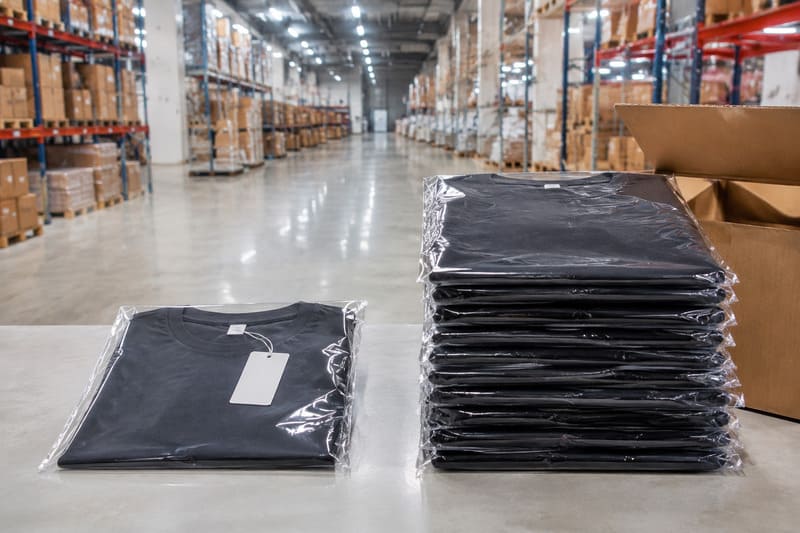
A t-shirt business depends heavily on the supplier because customers judge the brand by quality, delivery, and consistency. A strong brand can still lose trust if the fabric shrinks badly, prints crack, sizes vary, or shipments arrive late. Supplier selection is not a small detail.
Choose a supplier who understands your target product, answers questions clearly, supports your order model, and has stable quality control. In the early stage, many founders prefer suppliers who can support fulfillment or print-on-demand. Later, they can move into custom bulk production for better pricing.
What makes a supplier “reliable”?
A reliable supplier is not only the cheapest one. In my experience, a reliable supplier does five things well:
- They answer the real question, not just send a general reply.
- They explain what is possible and what is risky.
- They confirm details before production.
- They control quality at each stage.
- They give realistic lead times.
For garment production, small misunderstandings can become expensive. A buyer may say “heavy cotton,” but one factory may think 200 GSM, while another may think 260 GSM. A buyer may say “oversized,” but the supplier still needs a measurement chart. A buyer may request “vintage print,” but the final effect depends on fabric, ink, washing, and artwork.
So I always prefer written specifications. A tech sheet is very useful. It should include:
- Fabric composition
- Fabric weight, such as 180 GSM or 240 GSM
- Size chart and tolerance
- Fit reference
- Color reference and approval method, such as a Pantone target and approved lab dip
- Print or embroidery position
- Logo size
- Packing method
- Label requirements
- Inspection requirements
Why many brands consider Chinese garment suppliers
From my experience working with garment production in China, one practical advantage is the depth of supporting suppliers around the factory. Many supporting parts can be sourced locally, such as:
- Fabric
- Rib
- Neck tape
- Sewing thread
- Labels
- Hangtags
- Polybags
- Embroidery backing
- Print ink
- Heat transfer films
- Packaging materials
This matters because lead time is not only about sewing. Sometimes one small label can delay the whole order. In some regions, certain trims or logo materials may need to be imported. That can add time and uncertainty.
What quality control should you ask about?
For a new t-shirt business, quality problems can quickly turn into negative customer feedback, and online reviews can materially affect purchase decisions[^3]. I would ask a supplier about their inspection process before placing serious orders.
Common quality control checkpoints include:
| QC stage | What to check | Why it matters |
|---|---|---|
| Incoming material inspection | Fabric, color, trims, labels | Prevents wrong materials entering production |
| Cutting inspection | Panel accuracy and fabric defects | Reduces size and shape issues |
| Sewing inspection | Stitching, seams, measurements | Controls workmanship |
| Decoration inspection | Print, embroidery, heat press quality | Protects the visible brand image |
| Final inspection | Measurements, appearance, packing | Confirms goods before shipment |
| Performance testing | Shrinkage, colorfastness, wash test[^4] | Helps evaluate product durability |
How to judge communication quality
Communication is part of production quality. Slow or unclear replies create risk. A good supplier should be able to answer questions like:
- “Can you make this fabric weight?”
- “What is the minimum order quantity per color?”
- “What print method works best for this artwork?”
- “Can you make a sample before bulk production?”
- “What is the expected shrinkage after washing?”
- “What is the production lead time after approval?”
- “What happens if final inspection finds defects?”
I would be careful if the supplier says “yes, we understand” too quickly. Sometimes that means they are guessing. I prefer a supplier who asks detailed questions. Questions show that the supplier is trying to understand the real requirement.
Should I start with print-on-demand or custom bulk production?
A new t-shirt business often has limited cash and uncertain demand. If you order too much inventory too early, your money gets stuck in stock. If you only use print-on-demand forever, your unit cost may stay high. The better choice depends on your stage.
Start with print-on-demand or fulfillment if you need to test designs with lower inventory risk. Move to custom bulk production when you have stable monthly sales, proven designs, and enough cash flow. Bulk orders usually offer better pricing, more customization, and stronger control over product quality.

The early-stage model: fulfillment and print-on-demand
For a new store, fulfillment service can be practical. Some suppliers can keep ready goods and print your artwork after orders come in. This model is attractive because you do not need to buy a lot of stock.
The main benefits are:
- Lower starting cost
- Less inventory pressure
- Faster testing of designs
- Easier launch
- Lower risk if one design does not sell
The trade-offs are also clear:
- Higher unit price
- Less control over blank garment style
- Limited fabric and color options
- Lower brand differentiation
- Possible margin pressure
In simple terms, print-on-demand is good for testing. It is not always the best model for building long-term margin.
The growth-stage model: stock your own blanks
Once a design or brand starts selling every month, I would consider stocking custom blanks with the factory. This means you produce your own undecorated t-shirts in advance, then the factory prints or decorates them as customer orders arrive.
This can be a strong middle model:
- You get a better blank garment price than one-piece dropshipping.
- You can customize the fit, fabric, color, and labels.
- You can still use on-demand decoration and fulfillment after each customer order.
- You reduce delivery time compared with full custom production after each order.
For example, if your black oversized tee sells well every month, you may produce several thousand blank pieces and keep them at the factory. Then the factory can screen print, digitally print, hot press, or embroider based on actual orders.
The mature model: full custom bulk order
If you already know your demand, full custom bulk production can improve cost and brand control. You can decide:
- Fabric composition
- GSM
- Fit
- Collar shape
- Sleeve length
- Wash effect
- Labels
- Packaging
- Decoration
- Carton marking
Many factories have minimum order quantities. A practical starting point may be around 200 pieces per color for custom garment production, depending on fabric, style, and factory policy. Some complex items or special fabrics may require higher quantities.
Comparison table
| Model | Best for | Main benefit | Main risk |
|---|---|---|---|
| Print-on-demand | Testing ideas | Low inventory risk | Higher unit cost |
| Ready goods fulfillment | Fast launch | Shorter lead time | Limited customization |
| Custom blanks + on-demand decoration | Growing brands | Better price and control | Requires inventory planning |
| Full custom bulk production | Stable brands | Lower unit cost and greater customization | Higher cash commitment |
How I would decide
I would ask four questions:
-
Do I know which designs will sell?
If not, I would test first. -
Do I have enough cash for inventory?
If not, I would avoid large custom orders. -
Do I need a unique fit or fabric?
If yes, I would plan custom production sooner. -
Can I forecast monthly sales?
If yes, I would negotiate better pricing through planned bulk orders.
The goal is not to stay small forever. The goal is to use the right model at the right stage. A smart t-shirt business can start lean, then slowly move toward better margins and stronger product control.
What numbers should I calculate before launching a t-shirt business?
A t-shirt business can look profitable on the surface, but small costs add up quickly. Many new sellers calculate only the blank shirt and printing cost. Then they forget ads, samples, packaging, payment fees, returns, shipping, and slow-moving stock.
Before launching, calculate your full landed cost, contribution margin, break-even point, ad budget, and expected return rate. You should know how much remains after production, decoration, packaging, freight, platform fees, payment fees, discounts, and marketing. Clear numbers help you avoid selling at a loss.

The basic cost formula
A useful starting point is to separate variable costs that occur with each order from fixed or one-time launch costs.
A simple formula is:
Selling price - variable costs per order = contribution margin per order
Variable costs may include:
- Blank garment
- Printing or embroidery
- Neck label or woven label
- Hangtag
- Polybag or custom packaging
- Carton packing
- Freight to warehouse or customer
- Platform fee
- Payment fee
- Return allowance
- Discount allowance
- Advertising cost per purchase
Other launch costs, such as samples and photo shooting, should also be budgeted, but they are not necessarily incurred on every individual order.
If you sell a shirt for USD 30 and the product cost is USD 9, that looks good. But if shipping, ads, returns, and platform fees add another USD 12, the amount left to cover overhead and profit may be much smaller.
Example margin table
| Item | Example cost |
|---|---|
| Selling price | $30.00 |
| Garment + decoration | $8.50 |
| Packaging | $0.60 |
| Freight allocation | $2.00 |
| Platform/payment fees | $1.50 |
| Ad cost per purchase | $7.00 |
| Return/discount allowance | $1.50 |
| Estimated contribution margin | $8.90 |
This is only an example. Your actual numbers will vary by country, product, supplier, and channel. But the habit is important. You should calculate before you scale.
Minimum order quantity and cash flow
If you move from print-on-demand to bulk production, cash flow becomes more important. You may need to pay deposits, wait for production, wait for shipping, then sell inventory over time.
For custom garments, buyers often need to consider:
- Deposit amount
- Balance payment timing
- Production lead time
- Shipping lead time
- Customs clearance
- Warehouse receiving time
- Sales velocity
- Reorder point
For example, if your normal production plan is 45 days and ocean shipping takes about 30 days on your route, you may need to reorder before you run out. Otherwise, a successful ad campaign can create a stockout.
Do not price only against competitors
Competitor pricing is useful, but it should not control everything. A generic low-price store may have a different cost structure. A premium niche brand may have stronger margin. You need to price based on:
- Your brand positioning
- Your product quality
- Your target customer
- Your marketing cost
- Your fulfillment model
- Your required margin
If you want a sustainable t-shirt business, you need enough margin to pay for mistakes, growth, returns, and future development.
How should I promote a t-shirt business in the beginning?
A t-shirt business needs promotion because even a clear brand and good supplier will not create sales if people never see the product. Organic traffic can take time, so a new store needs a deliberate way to generate exposure and test demand.
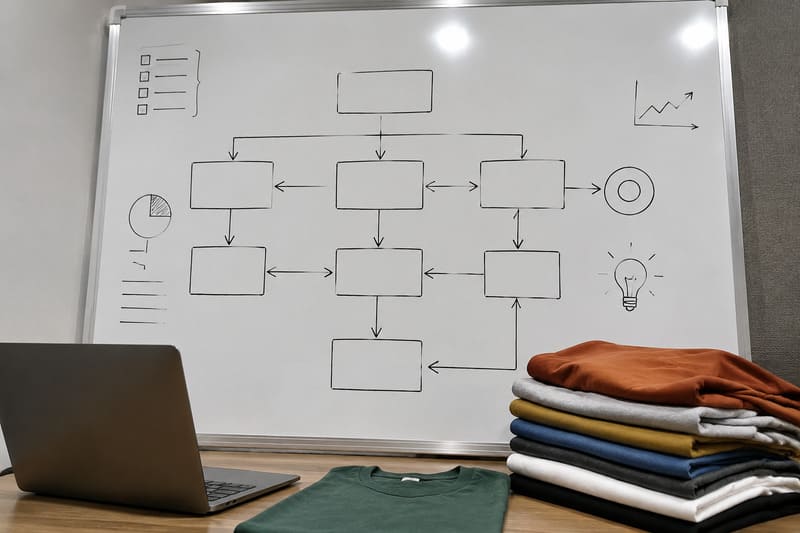
Paid advertising is one of the fastest ways to test a new t-shirt brand, especially on platforms where your audience already spends time. Combine ads with clear brand messaging, strong product photos, social proof, email capture, and repeated testing. Early promotion should sell the idea, not only the shirt.
Why ads matter at the beginning
I know ads can feel risky. Many founders worry about spending money before they have sales. But without traffic, you cannot learn much. Ads help answer important questions:
- Which audience responds?
- Which design gets clicks?
- Which price point converts?
- Which product photo works better?
- Which message creates trust?
- Which platform gives better results?
You do not need to start with a huge budget. But you do need enough testing to collect real signals. If you only show your product to a very small audience, it is difficult to make a serious judgment. You need enough traffic and conversions to collect meaningful signals before judging an audience, design, or ad creative.
Promote the lifestyle, not only the graphic
For many t-shirt brands, the product is simple. The story must do more work.
Instead of saying:
“Buy our cotton t-shirt.”
You can say:
“For people who feel more alive outside than indoors.”
That second message speaks to identity. It attracts a type of person. It also gives your visuals a direction. You can shoot photos outdoors, use natural colors, and write captions about weekend hikes, fresh air, and simple living.
If your audience is young people who love social events, your message, photos, and colors should look different. You may show city nights, friend groups, parties, music, and humor.
A simple launch promotion plan
Here is a practical plan I would use for a new t-shirt business:
-
Build a clear landing page
The page should show the brand idea, product benefits, size guide, shipping details, and return policy. -
Create 3–5 ad angles
Each angle should test a different message. For example, lifestyle, comfort, humor, community, or sustainability. -
Prepare strong visuals
Use clean product photos, model photos, close-ups, and short videos. -
Run small paid tests
Test audiences, creatives, and landing pages. Keep notes. -
Collect emails early
Offer launch discounts, early access, or limited drops. -
Retarget visitors
Retargeting can help bring previous visitors back to the site, especially when it is deployed early[^5]. -
Use customer content
Reviews, photos, and unboxing content can reduce trust barriers.
What should your ads say?
Your ads should answer three questions quickly:
| Question | What the customer wants to know |
|---|---|
| Who is this for? | “Is this brand made for people like me?” |
| Why is it different? | “Why should I buy this instead of a cheaper shirt?” |
| Can I trust it? | “Will the quality, size, and delivery be okay?” |
Many ads fail because they only show a shirt with a logo. That is not enough. Your promotion should repeat the brand concept again and again. People should quickly understand what the brand stands for.
Promotion and supply chain must match
Promotion can create demand quickly. That is good, but it can also expose supply chain problems. If your ad works and sales increase, you must be ready to fulfill orders.
Before scaling ads, I would confirm:
- Available stock
- Decoration capacity
- Packing capacity
- Shipping options
- Lead time
- Replacement process for quality issues
- Communication schedule with the supplier
Frequently Asked Questions
How much money do I need to start a t-shirt business?
You can start with a small budget if you use print-on-demand, but you still need money for samples, website setup, product photos, and ads. If you want custom bulk production, your starting budget must be higher because you need to pay for inventory, packaging, freight, and storage.
Is print-on-demand good for a t-shirt business?
Print-on-demand is good for testing designs and reducing inventory risk. It is usually not the best long-term model if you need lower unit cost, custom fabric, private labels, or stronger quality control. Many brands start with POD, then move to custom blanks or bulk production later.
How do I find a reliable t-shirt supplier?
You should check the supplier’s product experience, communication quality, sampling process, quality control steps, lead time, and ability to support your order model. You should also request samples, verify documents where relevant, and confirm all specifications in writing before bulk production.
What is the best niche for a t-shirt brand?
The best niche is one with a clear audience, strong identity, and enough buying power. Good examples include outdoor lifestyles, fitness communities, eco-conscious consumers, local culture, music scenes, humor-based groups, and work-related communities. The niche should be specific enough to create connection.
When should I switch from POD to bulk production?
You should consider switching when you have proven designs, stable monthly sales, predictable demand, and enough cash to hold inventory. Bulk production can improve cost and customization, but it also increases inventory risk. I would switch gradually instead of making a huge first order.
Conclusion
Starting a t-shirt business is mainly about four things: clear positioning, the right production model and supplier, healthy unit economics, and consistent promotion. I would first define the audience and brand identity, then choose a production model and supplier that fit the current stage, calculate whether the numbers work, and finally invest in marketing to test the market. If you are ready to develop custom t-shirts, polo shirts, hoodies, or sweatpants with a manufacturing partner, you can contact Garmentown to discuss samples, specifications, production planning, and fulfillment options.
[^1]: Feinberg, Mataro, and Burroughs, "Clothing and Social Identity," Clothing and Textiles Research Journal (1992), https://journals.sagepub.com/doi/10.1177/0887302X9201100103.
[^2]: "Brand Equity Explained: How to Build and Measure Success" - Harvard Business School Online, https://online.hbs.edu/blog/post/brand-equity.
[^3]: "How Online Reviews Influence Sales" - Medill Spiegel Research Center, https://spiegel.medill.northwestern.edu/how-online-reviews-influence-sales/.
[^4]: "Standard Test Methods and Procedures" - AATCC, https://www.aatcc.org/testing/standards.
[^5]: "With 'Retargeted' Advertising, Sooner Is Better Than Later" - Stanford Graduate School of Business, https://www.gsb.stanford.edu/insights/retargeted-advertising-sooner-better-later.