Starting an online t-shirt store is not mainly a website-building problem. The website itself can be set up relatively quickly. The harder part is making sure your products, fulfillment process, and customer information are ready before traffic starts arriving.
To start an online t-shirt store, first decide where and how you want to sell, then prepare your products and product information, build clear product pages, set up payment, shipping, returns, and fulfillment, and finally launch with a plan to bring in and test traffic.

If you are still deciding who your target customer is, how to position the brand, or whether you should start with print-on-demand or bulk production, see our broader guide on how to start a T-shirt business.
This guide focuses on the next step: turning that business idea into an online store that customers can actually buy from.
What Should I Decide Before Building My Online T-Shirt Store?
Before you start creating product pages, you still need one basic decision: who is this store for?
You do not need a complicated brand strategy at this stage, but your audience should be clear enough that your products, photos, design style, and store layout all feel connected.
People often use clothing to express identity, lifestyle, and group belonging.[^1] That is why a store built around one recognizable audience usually feels more coherent than a store containing unrelated designs for completely different types of buyers.
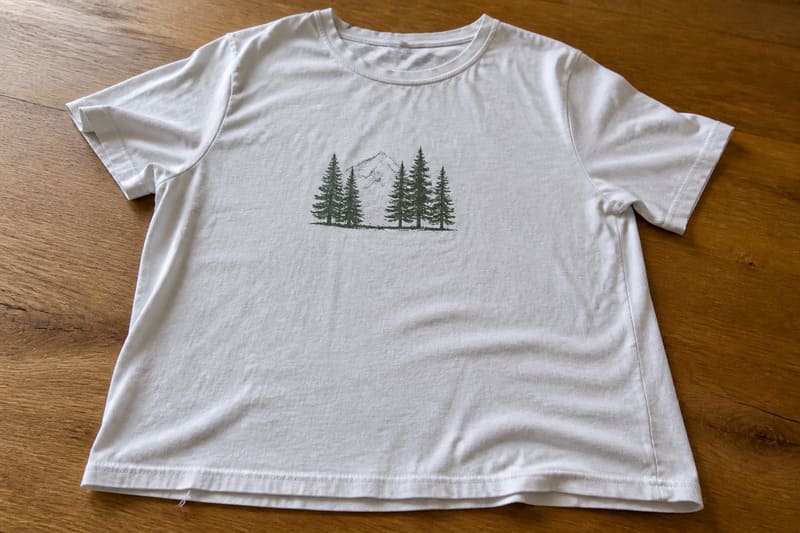
For example, a store aimed at outdoor enthusiasts may use:
- Earth-tone colors
- Relaxed or practical fits
- Nature-related artwork
- Outdoor lifestyle photography
- Durable fabrics
- Simple packaging
A gym-focused store would probably make very different choices.
The important point is not to spend weeks building a branding document. You just need enough clarity to make consistent decisions when choosing products and building the store.
If your positioning is still unclear, solve that first. The online store should express the business strategy, not replace it.
Which Sales Model Should I Use for an Online T-Shirt Store?
You do not necessarily need to sell through only one channel.
The right setup depends on how much control you want, how much inventory you are willing to hold, and how you plan to attract customers.
| Sales model | Main advantage | Main limitation |
|---|---|---|
| Your own online store | Full control over brand and customer experience | You must generate your own traffic |
| Online marketplace | Existing customer traffic | Less control and more direct competition |
| Print-on-demand connected store | Low inventory risk and easy testing | Higher unit cost and limited customization |
| Own store + marketplace | Multiple ways for customers to find you | More products and orders to manage |
For a new brand, I would normally keep the system simple.
You may start with your own website connected to a fulfillment supplier, or use a marketplace while testing whether people actually want the products.
Once sales become more predictable, you can add other channels.
The mistake is building five sales channels before you have proven one.
What Product Information Should I Prepare Before I Build the Store?
This is an area many new sellers underestimate.
A T-shirt cannot be represented online by one mockup and a price. Customers cannot touch the fabric, try the garment on, or inspect the printing, so your product page has to replace that physical experience with information.
Before listing a product, I would prepare:
- Front, back, and detail photos
- Available colors
- Available sizes
- Actual garment measurements
- Fabric composition
- Fabric weight if relevant
- Fit description
- Printing or decoration method
- Artwork placement
- Care instructions
- Expected production or dispatch time
- Shipping information
- Return and exchange information
If you have not prepared your artwork yet, you can also see our guide on how to find a graphic designer for a T-shirt.
Do Not Rely Only on S, M, L, and XL
Two factories can both label a shirt "Large" while producing very different measurements.
That becomes even more important when you sell oversized, slim-fit, heavyweight, cropped, or performance T-shirts.
A useful size chart should show actual garment measurements such as:
- Chest width
- Body length
- Shoulder width
- Sleeve length
If possible, also explain how you measure the garment.
This reduces ambiguity for the customer and also forces you and your supplier to agree on one size specification before production.
Give Customers Enough Fabric Information
A description such as "premium cotton T-shirt" does not tell the customer very much.
Where relevant, give more specific information:
- 100% cotton or cotton/polyester blend
- Fabric weight
- Jersey, interlock, or other construction
- Pre-shrunk treatment if applicable
- Washing instructions
- Special finish or wash
The information must match the actual production specification. Do not write marketing claims on the product page that your supplier cannot confirm.
What Should a Good T-Shirt Product Page Show?
A good product page should answer most of the questions a customer would normally ask if they were holding the T-shirt in their hands.
| Information | What the customer needs to understand |
|---|---|
| Product photos | What does the shirt really look like? |
| Size chart | Which size should I buy? |
| Fabric | What is it made from? |
| Fabric weight | Is it light, medium, or heavyweight? |
| Fit | Regular, slim, relaxed, or oversized? |
| Decoration | Screen print, DTF, DTG, embroidery, etc.? |
| Care instructions | How should I wash and dry it? |
| Shipping estimate | When will I receive it? |
| Return policy | What happens if the size is wrong? |
Use Real Samples When Possible
Mockups are useful when you are testing ideas, but I would not depend on them forever.
Once you decide to seriously sell a design, make a real sample.
Check:
- Fabric hand feel
- Garment measurements
- Print size
- Print position
- Color accuracy
- Neck label
- Packaging
- Shrinkage after washing
- Print performance after washing
Textile testing standards exist for areas such as dimensional change and colorfastness,[^2] but even a basic internal wash test can catch obvious problems before customers do.
A small problem in production becomes a large problem after hundreds of orders.
How Should Fulfillment Work for an Online T-Shirt Store?
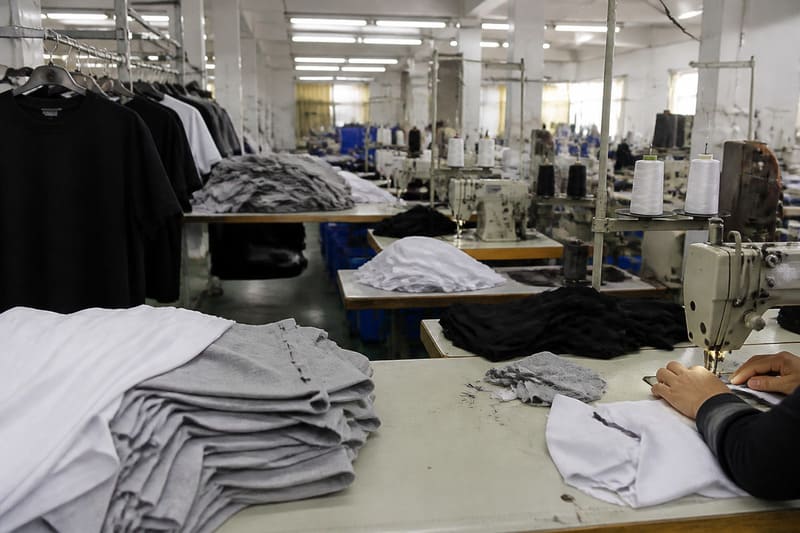
You can build a beautiful store and still fail operationally if the fulfillment process behind it is unclear.
I've been working in garment manufacturing in China for over a decade, and this is one of the areas where I see new brands make avoidable mistakes.
They focus on the website first and only later ask:
- Who will hold the stock?
- Who will print each order?
- Who will pack it?
- Who will ship it?
- How quickly can an order leave?
- What happens if a customer receives a defective shirt?
Those questions should be answered before launch.
Option 1: Print-on-Demand or One-Piece Fulfillment
When the store is new, you may not know which designs will sell.
A fulfillment supplier can keep blank T-shirts and decorate them after your customer places an order.
The advantages are clear:
- Low inventory risk
- Lower starting investment
- Easy design testing
- No need to manage your own warehouse
The trade-offs are also clear:
- Higher unit cost
- Limited blank garment options
- Less control over fabric and fit
- Less customization
This model is useful for testing demand.
Option 2: Produce Your Own Blank T-Shirts and Store Them
Once you know which styles sell regularly, you can produce your own blank garments and hold stock either at your own warehouse or with a supplier.
Then decoration can be completed according to actual orders.
This gives you more control over:
- Fabric
- GSM
- Fit
- Color
- Labels
- Packaging
while still allowing relatively flexible order fulfillment.
This can be a useful middle stage between pure print-on-demand and full finished-goods inventory.
Option 3: Produce Finished Inventory in Bulk
If demand becomes predictable, you can produce finished products in batches.
This normally gives you stronger control over cost and consistency, but now inventory planning becomes much more important.
You need to think about:
- How many units to produce
- Which sizes sell fastest
- Which colors sell fastest
- Reorder timing
- Production lead time
- Shipping lead time
- Storage cost
- Slow-moving inventory
There is no universal MOQ that works for every factory or every product. It depends on the fabric, style, decoration method, color, and production setup.
The important point is to use the production model that matches your current sales stage.
What Should I Confirm With My Supplier Before Launch?
Before you begin sending real customer orders, confirm the complete order process with your supplier.
I would check:
- Which products are actually in stock?
- How quickly can decoration be completed?
- What is the daily production capacity?
- Who checks the print before packing?
- What packaging will be used?
- Can custom labels or inserts be added?
- What shipping methods are available?
- When will tracking information be provided?
- How will defective products be handled?
- How will stock levels be communicated?
Communication quality matters.
If a supplier answers every technical question with "yes, no problem" without asking for specifications, I would be careful.
For garment production, details matter.
A supplier should ask about things like fabric, measurements, artwork size, print position, color standards, packaging, and delivery requirements.
Those questions reduce mistakes.
How Should I Set Up Shipping, Payment, and Returns?
These parts may not be exciting, but they directly affect whether a customer feels comfortable placing an order.
Payment
Your checkout should be simple and should support the payment methods commonly used by your target customers.
Before launch, place your own test order.
Check the full process from:
product page → cart → checkout → payment → confirmation email → order fulfillment
Do not assume the system works simply because the website looks correct.
Shipping
Customers should be able to understand:
- Where you ship
- Approximate processing time
- Approximate delivery time
- Shipping cost
- Whether tracking is provided
- Whether duties or taxes may apply
If you use print-on-demand or factory-direct fulfillment, make sure the shipping promise on the website matches what the supplier can actually achieve.
Do not promise three-day delivery if the real process requires several days for printing before the package even leaves the factory.
Returns and Exchanges
Apparel has an additional problem: sizing.
Even when the product is made correctly, customers may order the wrong size.
Your return policy should explain:
- Whether returns are accepted
- How long customers have to request one
- Whether exchanges are available
- Who pays return shipping
- What happens with personalized products
- What happens when the product is defective
The specific legal requirements depend on where you sell, so check the rules that apply to your target market.
How Do I Bring Traffic to a New Online T-Shirt Store?
Building the store does not automatically create traffic.
A new store needs a deliberate way to reach its first customers.

Possible traffic sources include:
- Paid social advertising
- Search advertising
- Marketplace traffic
- Organic search
- Social media content
- Influencers or creators
- Existing communities
- Offline events
You do not need to use all of them at once.
Choose one or two channels that match your audience and start testing.
Test the Message, Not Only the Design
If an ad does not work, the problem is not always the T-shirt.
You may need to test:
- Audience
- Product photo
- Video
- Headline
- Price
- Offer
- Landing page
- Brand message
For example, instead of simply advertising:
"100% cotton printed T-shirt"
an outdoor brand may communicate:
"For people who would rather spend Saturday on a trail than in a shopping mall."
The second version tells the customer who the product is for.
Track the Numbers
At minimum, I would monitor:
- Store visitors
- Product page views
- Add-to-cart rate
- Checkout rate
- Conversion rate
- Average order value
- Customer acquisition cost
- Return or refund rate
Traffic without measurement does not tell you very much.
The goal of the first stage is not only to make sales. It is to learn which products, customers, messages, and channels actually work.
When Should I Upgrade From Print-on-Demand to Custom Production?
Do not switch simply because custom manufacturing sounds more professional.
Switch when the sales data gives you a reason.
I would consider moving toward custom production when:
- Certain designs sell consistently
- You can forecast monthly demand
- Customers are asking for better fit or fabric
- The current POD cost is limiting margin
- You want your own labels or packaging
- You have enough cash to hold inventory
Moving too early creates inventory risk.
Moving too late can leave you with high unit costs and limited product differentiation.
The transition should usually happen gradually.
For a more detailed explanation of POD, custom blanks, full bulk production, supplier selection, costs, and cash flow, see our guide on how to start a T-shirt business.
What Should I Check Before Launching the Store?
Before you send traffic to the site, I would run through this checklist.
Product
- [ ] Sample approved
- [ ] Fabric confirmed
- [ ] Measurements confirmed
- [ ] Print or embroidery approved
- [ ] Colors confirmed
- [ ] Care instructions confirmed
- [ ] Packaging confirmed
Store
- [ ] Product photos uploaded
- [ ] Product descriptions complete
- [ ] Size chart visible
- [ ] Prices correct
- [ ] Inventory correct
- [ ] Shipping information visible
- [ ] Return policy visible
Checkout
- [ ] Test order completed
- [ ] Payment works
- [ ] Confirmation email works
- [ ] Shipping fee is correct
- [ ] Mobile checkout tested
Fulfillment
- [ ] Supplier receives the order correctly
- [ ] Decoration instructions are clear
- [ ] Packing process confirmed
- [ ] Tracking process confirmed
- [ ] Defect/replacement process confirmed
The purpose of the checklist is simple: find problems yourself before paying customers find them.
Frequently Asked Questions
How much money do I need to start an online T-shirt store?
There is no single number because the cost depends on your model.
A print-on-demand store can require relatively little inventory investment, but you may still spend money on samples, website tools, product photography, design, and marketing.
A custom inventory model needs more capital because you are paying for production and stock before the customer buys it.
Instead of starting with a fixed budget number, calculate what your specific model requires.
Should I use print-on-demand or order inventory upfront?
For a new store with unproven designs, print-on-demand can reduce inventory risk.
Once you have consistent sales data, custom blanks or bulk production can give you more control over cost, fabric, fit, labels, and packaging.
I would normally move gradually instead of placing a large first inventory order.
How do I verify if a T-shirt supplier is reliable?
Request samples first.
Pay attention to:
- Product quality
- Communication
- Sampling accuracy
- Quality control
- Lead time
- Packaging
- Whether they follow written specifications
Do not judge a supplier only by certificates or a low quotation.
The way they communicate and handle details during sampling often tells you more about what will happen during bulk production.
How long does it take for an online T-shirt store to become profitable?
There is no reliable universal timeline.
It depends on your product margin, advertising cost, conversion rate, return rate, order value, repeat purchases, and how quickly you find products that customers actually want.
Instead of planning around a fixed number of months, track whether the economics of each order are improving.
Can I run a T-shirt store as a side business?
Yes, especially when production and fulfillment are outsourced.
Your main responsibilities may be product development, marketing, customer service, and monitoring the supplier.
However, outsourcing production does not make the business automatic. You still need to manage product quality, customer expectations, inventory, and marketing.
Conclusion
Starting an online T-shirt store is not just about choosing a website platform.
First decide how you will sell. Then prepare real product information, build clear product pages, confirm payment and shipping, and make sure your fulfillment process works before customers begin ordering.
If you are still testing demand, start with a lower-risk fulfillment model. When sales become predictable, you can gradually move toward custom blanks or full custom production for better control over the product and supply chain.
The website is the front end of the business. The product and fulfillment system behind it are what determine whether the customer receives what the website promised.
[^1]: "Understanding the effect of brand identity driven by consumer ... - PMC", https://pmc.ncbi.nlm.nih.gov/articles/PMC9521331/. Research on brand identity and self-congruity supports the idea that consumers can use brands and products as part of identity expression. Scope note: The research applies to consumer behavior broadly and is not specific to new T-shirt stores.
[^2]: "Standard Test Methods and Procedures - AATCC", https://www.aatcc.org/testing/standards. AATCC publishes established textile test methods including colorfastness to laundering and dimensional changes after home laundering.