
You just approved a big batch of custom tees, and then it hits you — what if the screen printing starts cracking or fading after a few washes? That nagging worry can keep any procurement manager up at night. The good news is that modern screen printing technology has come a long way, and durability is far more reliable than it used to be.
So, how long does screen printing last on a shirt? Based on our manufacturing experience, a well-produced and properly cured screen print can remain usable through years of regular wear, but there is no universal "60 to 100 washes" guarantee. The actual lifespan depends on the ink system, whether the ink is matched to the fabric, the print construction, proper curing, and how the garment is washed. Standardized laundering tests can help evaluate wash fastness, but for a custom order, a production wash test is still the most practical way to verify durability.[^1][^2]
That answer is less tidy than a fixed wash-count number, but it is much more useful when you're buying custom garments. The difference between a print that fails early and one that holds up well usually comes down to a few very specific production choices. Let me walk you through each factor so you know exactly what to look for — and what to ask your supplier.
What Are the Main Factors That Affect Screen Printing Durability?
When you're sourcing custom printed garments, durability isn't just a "nice to have" — it's directly tied to your brand reputation and after-sales costs. A print that cracks or peels too early? That's a customer complaint waiting to happen.
The most important production variables are the ink system and its compatibility with the fabric, proper curing, and the way the ink deposit is built and controlled during printing. These variables are connected, so durability cannot be judged from ink price or the number of print passes alone.[^2][^3]
Ink Quality and Fabric Compatibility — The Foundation of Every Print
Let's start with the most fundamental element: the ink itself. Some factories refer to screen printing ink as "paste," although terminology varies by ink system and market.
Generally speaking, two common categories used for garment screen printing are:
| Ink Type | Also Called | Common Use |
|---|---|---|
| Water-based ink | Water-based / HSA / discharge systems | Soft-hand printing; depending on the formulation and underbase, it can be used on both light and dark garments |
| Plastisol ink | PVC-based plastisol | Versatile, high-opacity printing; different formulations are available for cotton, blends, polyester, and other substrates |
Here's the thing most buyers don't realize: the cost difference between low-grade and high-grade ink can be massive. I've seen ink prices range from about $2 per kilogram all the way up to $20 per kilogram. That's a 10x difference.
But price alone is not a durability specification. Different inks are formulated for different fabrics, cure temperatures, opacity requirements, stretch characteristics, and production conditions. A more expensive ink is not automatically the correct ink for every garment.
So when a supplier quotes you a rock-bottom price on a screen-printed tee, it's worth asking more specific questions: what ink system are they using, is it designed for your fabric, and what curing conditions does the manufacturer specify? Those answers tell you more than the ink price alone.[^3]
Pro tip: If you're evaluating samples from multiple suppliers, don't just look at the print on arrival. Wash the samples under the same conditions and then compare them. That's where the real quality difference shows up.
Curing and Additives — Follow the Ink System
This is one of the most important parts of durability, and it is also one of the easiest places for production to go wrong.
For plastisol printing, the ink needs to reach the cure conditions specified for that particular formulation. If it is under-cured, the print may peel, crack, rub off, or fail during washing. Industry troubleshooting guidance specifically recommends checking curing conditions and performing wash tests when these failures occur.[^2]
Additives also need to be treated carefully. Bonding agents or catalysts are not universal requirements for every screen printing ink. Some formulations recommend a specific bonding agent at a defined ratio, while other ink systems specifically state that bonding agents are not recommended.[^3]
In our sourcing experience, additive prices can vary dramatically — from around $15 per kilogram to $100 per kilogram in some cases. But just like ink price, additive price by itself does not tell you whether the final print will be more durable.
The better question to ask your supplier is: What exact ink and additive system are you using, what ratio does the ink manufacturer recommend, and what cure conditions are required? Using the correct formulation matters much more than simply adding more or buying the most expensive additive.
Ink Deposit and Print Construction — More Isn't Always Better
The third factor is how the print itself is constructed. Screen mesh, stencil thickness, squeegee pressure, print strokes, underbases, flash curing, and ink deposit all affect the final result.
The important point is that more ink does not automatically mean a more durable print.
A deposit that is too thin may create opacity or penetration problems, while an excessively thick or inconsistent deposit can take more time or heat to cure completely. Industry curing guidance specifically notes that thicker ink films require appropriate curing adjustments, and in some troubleshooting situations reducing excessive print strokes or ink thickness is recommended.[^2]
For buyers, this means you should not specify a universal minimum such as "four or five layers." The correct print construction depends on the design, ink system, garment color, fabric, mesh, and production setup.
What matters is that the supplier controls the ink deposit consistently, reaches the required cure throughout the printed film, and verifies the result through testing.
This is why wash testing samples before committing to a large order is so important.
Water-Based Ink
Water-based ink is often associated with light-colored garments because traditional systems can produce a very soft print with relatively little surface build-up.
However, water-based printing is not limited to light garments. Modern high-solids acrylic and discharge systems, as well as suitable underbase techniques, can also be used for printing on dark garments.[^4]
One of the main reasons buyers choose water-based printing is the softer hand feel. Depending on the specific ink system, fabric, and wash conditions, the print may also develop a softer, more worn-in appearance over time.
But don't assume that water-based automatically means less durable. A properly selected and properly cured water-based system can provide good wash fastness. Just like plastisol, durability depends on the complete production system rather than the ink category alone.
Plastisol Ink
Plastisol ink can be used on both light and dark garments and is widely used because it offers strong opacity, consistent production performance, and a wide range of formulations.
There are specific plastisol systems for cotton, poly-cotton blends, polyester, and other substrates, and their recommended curing temperatures can differ significantly.[^3]
The key risk with plastisol is not simply "too few layers." Premature cracking, peeling, or washing off can result from several production problems, including:[^2]
- The ink was under-cured
- Additives were used incorrectly
- The ink did not penetrate or deposit consistently
- Surface treatments on the garment interfered with the print
- The ink system was not appropriate for the fabric
- The garment is washed or dried under unnecessarily harsh conditions
Polyester introduces another issue: dye migration. Heat used during printing and curing can reactivate dyes in some polyester fabrics, causing them to migrate into the ink. This is why printers may use polyester-specific, low-bleed, blocker-base, or lower-cure ink systems depending on the garment.[^3][^5]
When all production variables are controlled, plastisol screen printing is highly durable. But just like other printing systems, there is no universal wash-count guarantee that applies to every ink, fabric, and production setup.
Is Screen Printing Durability Still Something to Worry About in 2026?
Here's where I want to give you some perspective. A lot of the "screen printing doesn't last" anxiety comes from experiences people had years ago, when materials and production controls were less consistent.
In 2026 — heading into 2027 — durability is much easier to control, but it is not an automatically "solved problem." Modern ink suppliers offer standard-cure, low-cure, flexible-cure, polyester-specific, and other specialized formulations, with different requirements for substrates, additives, and curing. The fundamentals still matter: choose the correct ink system, cure it properly, and verify the result through testing.[^2][^3]
How Far the Technology Has Come
I've been in garment manufacturing since 2006, and the improvement in screen printing durability over the past decade has been dramatic. The inks are better. The additives are better. The curing equipment is more precise. The whole process has matured.
Here's a real-world example that puts things in perspective: some of the screen printing we do on denim fabrics goes through post-treatment processes like stone washing and sand washing. These are extremely aggressive treatments — we're talking about tumbling garments with actual pumice stones. And the screen printing survives it. If a print can handle that kind of abuse, your customer's home washing machine is not going to be a problem when the printing process has been properly controlled.
When Should You Still Be Careful?
That said, better technology doesn't mean zero risk. Here are situations where screen printing durability concerns are still legitimate:
- Ultra-low-cost orders where the supplier is cutting every possible corner
- Unusual fabric blends that require a more specialized ink system
- Novelty or specialty inks (glow-in-the-dark, puff print, metallic) that have different durability profiles
- No wash testing was done before mass production
The fix for all of these? Ask the right questions, request wash test results, and work with a manufacturer who is transparent about their materials and process.
How Can Buyers Ensure Screen Printing Lasts Longer?
Durability isn't just determined at the factory. As a buyer, there are steps you can take both during procurement and in your care instructions to maximize screen printing longevity.
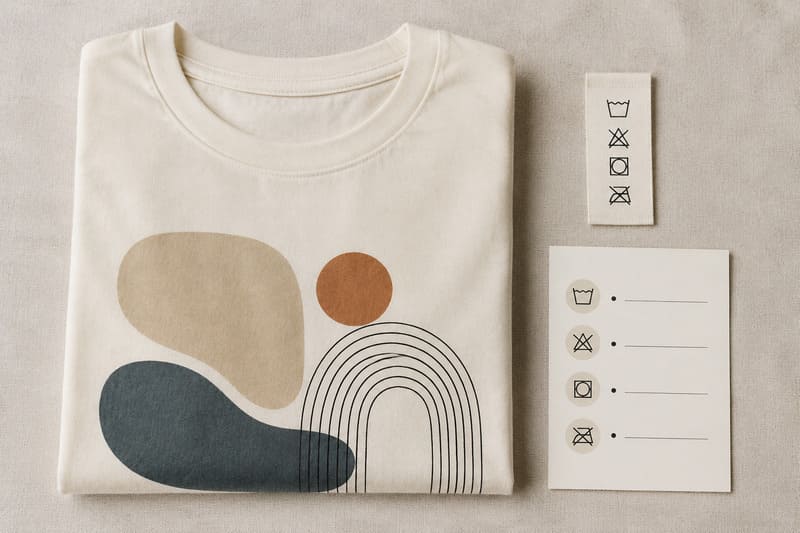
To ensure screen printing lasts as long as possible, buyers should confirm that the ink system is compatible with the chosen fabric, request pre-production wash testing, make sure curing is controlled according to the ink manufacturer's requirements, and include appropriate care instructions on garment labels.
Your Pre-Production Checklist
Before you approve mass production, here's what I recommend:
- Request a pre-production sample made with the same fabric, ink system, and print construction that will be used in bulk
- Agree on a wash-test protocol and keep the washing temperature, detergent, drying method, and number of cycles consistent when comparing samples
- Ask your supplier directly about the ink system, fabric compatibility, curing method, and whether any additives are recommended by the ink manufacturer
- Specify requirements in your tech sheet — don't assume the factory will automatically use the right system for every fabric
- Include wash testing in your QC protocol — samples from mass production should also be checked when durability is a critical requirement
Care Label Recommendations
Even the best screen printing will degrade faster if the end consumer mistreats the garment. Including clear care instructions helps protect your brand:
- Turn garment inside out before washing
- Wash in cold or cool water
- Avoid bleach and harsh detergents
- Air dry or tumble dry on low heat
- Do not iron directly over the print
These steps reduce unnecessary heat and mechanical stress on the printed area and help preserve the print over repeated washing.
Frequently Asked Questions
Does screen printing crack after washing?
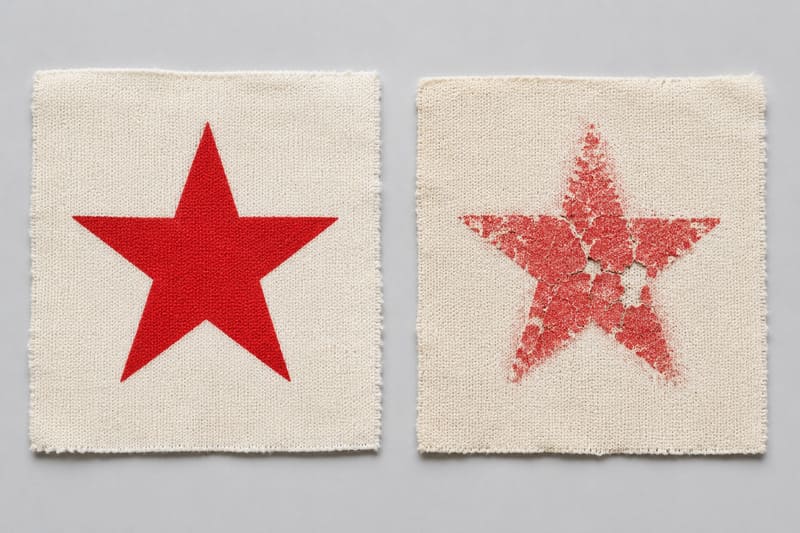
Quality screen printing should not crack after just a few normal washes. Early cracking, peeling, or washing off can indicate under-curing, incorrect use of additives, insufficient ink penetration, inconsistent ink deposit, or an ink system that is not appropriate for the garment.[^2]
If a print begins failing very early, the production process should be investigated rather than assuming that cracking is an unavoidable limitation of screen printing.
Is screen printing more durable than heat transfer?
It depends on what type of heat transfer you're comparing it with. "Heat transfer" can include HTV, DTF, and several other systems, and they do not all have the same durability.
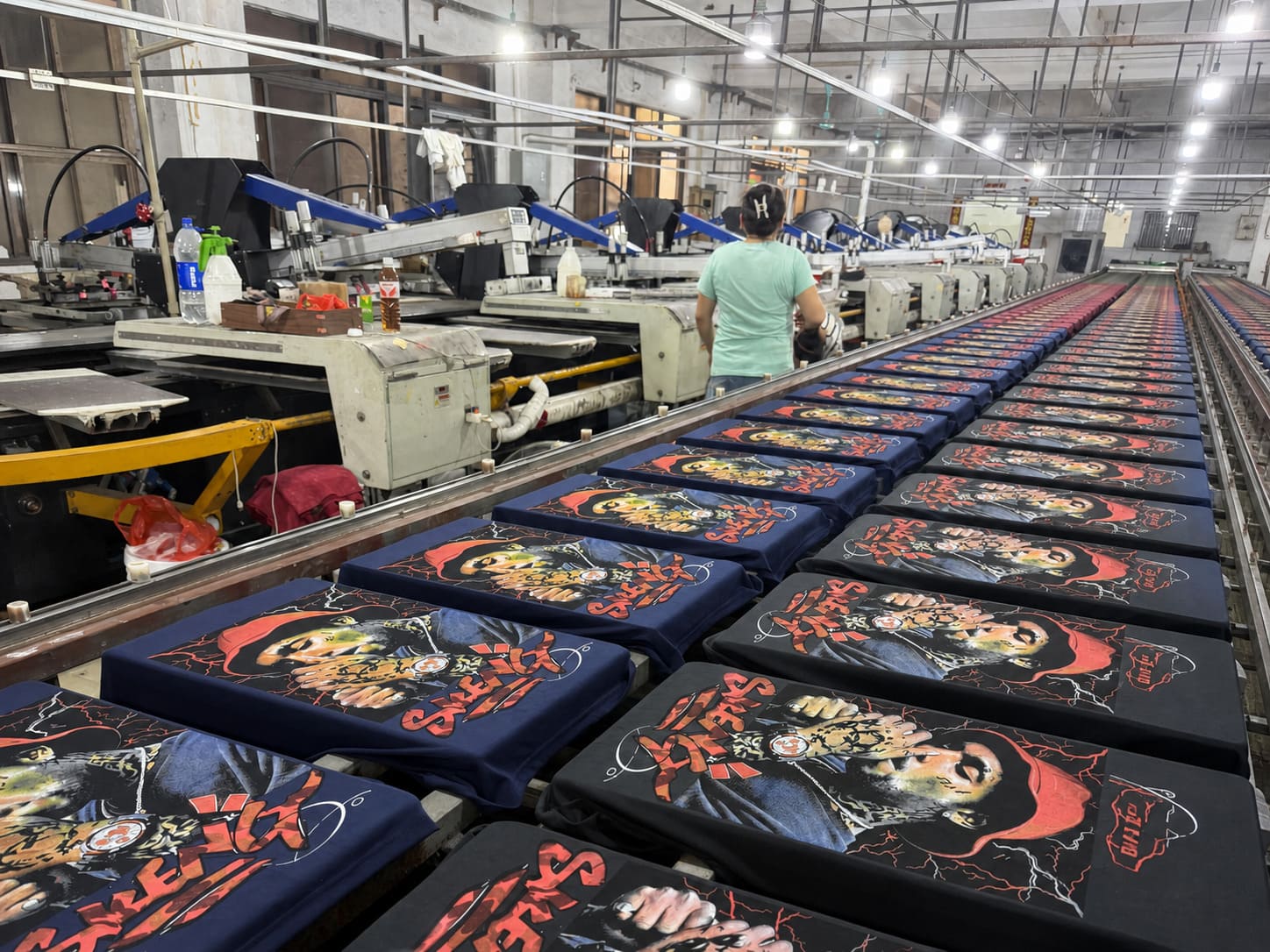
Screen printing is widely used when long-term wash durability and large production volumes are priorities. Modern DTF systems have also improved significantly and can provide durable results when properly produced and applied.[^6]
For a bulk order, the most useful comparison is not the name of the printing method alone. Ask suppliers to produce samples and test them under the same wash conditions.
How many washes can screen printing survive?
There is no universal number of washes that every screen print should survive.
Ink system, fabric, cure conditions, print construction, detergent, washing temperature, drying method, and mechanical wear can all change the result. Standardized laundering methods such as AATCC TM61 are useful for evaluating and comparing textile wash fastness, but they should not be interpreted as a universal "60–100 wash" guarantee for every screen-printed T-shirt.[^1]
For custom production, agree on a wash-test requirement with your supplier and test the actual production specification.
Can you fix screen printing that's starting to fade?
Once screen printing begins to fade, there's no practical way to restore it on the garment. Prevention is the only real solution. This means specifying quality materials upfront and conducting wash tests before mass production. For buyers, it's far cheaper to invest in quality during manufacturing than to handle returns and complaints later.
Does fabric type affect screen printing durability?
Yes. Cotton, polyester, poly-cotton blends, and treated performance fabrics can require different ink formulations and curing conditions. Ink manufacturers publish different substrate recommendations and cure temperatures for different product systems.[^3]
Polyester creates the additional risk of dye migration during curing, so printers commonly evaluate the garment and use appropriate low-bleed, blocker, or lower-temperature systems when necessary.[^5]
Always confirm with your manufacturer that the ink formulation and curing process are compatible with your chosen fabric.
Conclusion
So, how long does screen printing last on a shirt? A well-produced and properly cured screen print can remain usable through years of regular wear, but there is no single wash-count guarantee that applies to every shirt.
The factors that matter most are the ink system and fabric compatibility, proper curing, controlled print construction, and washing conditions. Screen printing technology is mature and highly reliable, but durability still depends on getting those production details right.
For buyers, the most dependable approach is simple: specify the requirements clearly, approve a production-representative sample, and verify durability through wash testing before committing to a large order.
[^1]: AATCC TM61, Test Method for Colorfastness to Laundering: Accelerated. This standardized test method evaluates textile colorfastness under accelerated laundering conditions. It is useful for evaluating repeated washing performance but does not establish a universal lifespan or a fixed 60–100 wash guarantee for screen-printed garments.
[^2]: PRINTING United Alliance / Screen Printing Technical Foundation, Textile Plastisol Curing Troubleshooting Guide. The guide identifies under-curing, improper additive use, inadequate ink penetration, inconsistent ink deposits, and substrate-related issues as causes of plastisol printing failures and recommends wash testing to verify proper cure.
[^3]: Avient / Wilflex, Product Selection Guide. Manufacturer technical data shows that plastisol formulations are designed for different substrates and use different cure temperatures and additive requirements; bonding agents are recommended for some systems and specifically not recommended for others.
[^4]: ScreenPrinting.com, The Evolution of High Solids Acrylic Ink. Industry guidance explaining how modern HSA water-based systems can provide opacity on dark garments and broaden the applications of water-based garment printing.
[^5]: ScreenPrinting.com, Screen Printing on Polyester and Blends. Industry guidance on polyester dye migration and the need to match ink systems and curing conditions to polyester and blended garments.
[^6]: Printful, DTF Printing vs Screen Printing: Which Method Fits Your Brand?. Industry comparison discussing the durability and production characteristics of DTF and screen printing.