Figuring out how long a shirt order takes can be frustrating — especially when you're planning a product launch, a promotional campaign, or a seasonal collection. Miss the delivery window and you could lose sales, disappoint customers, or blow your budget on air freight. The good news? With the right factory and clear requirements, the timeline is more predictable than you think.
A typical shirt order takes anywhere from 3 to 50 days, depending on the order type, quantity, customization level, and complexity. Ready-made blank shirts with no logo can ship in as few as 3 days. Semi-custom orders with logo printing usually take 5–15 days. Fully custom orders — where fabric, color, decoration, and packaging are all specified — generally require 30 to 50 days.
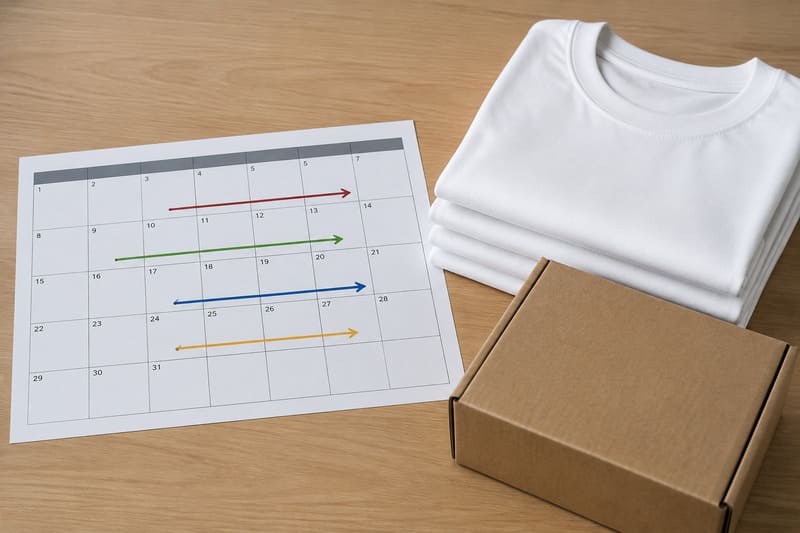
Now, before we go any further, let me set the scope. In this article, I'm talking about the most common order quantities — roughly 50 to 100,000 pieces. If you're placing an order for 2 million or 5 million shirts, well, 50 days obviously won't cut it. We're not covering those extreme cases here. Let's focus on what most buyers actually deal with day to day, and break down the three main scenarios that determine your shirt order lead time.
What if you order ready-made blank shirts with no customization?
You need shirts fast. Maybe it's a last-minute event, a stock replenishment, or a test run before committing to a bigger order. The clock is ticking and you don't have weeks to wait.
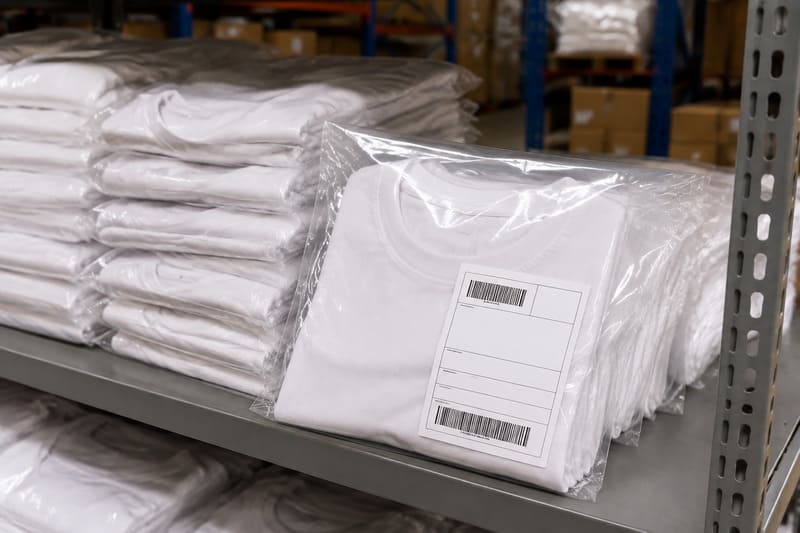
If a factory has ready goods in stock and you don't need any logo or decoration added, your shirt order can ship within 3 days after you place it. This is the fastest possible scenario — essentially, you're buying off the shelf.
How does this work in practice?
This is pretty straightforward. Factories like ours maintain an inventory of blank T-shirts — sometimes called "blanks" or "light boards" — in a range of popular colors and sizes. When your order comes in, the warehouse team just picks, packs, and ships.
Here's what makes this option attractive:
- Low minimum order quantity (MOQ): Typically as low as 50 pieces, sometimes even less.
- No color limitations: You choose from whatever colors and sizes are currently in stock.
- No production wait: There's no cutting, sewing, or printing involved. The shirts already exist.
- Predictable cost: Pricing is usually fixed per piece since there's no custom work.
When does this make sense?
| Scenario | Why it works |
|---|---|
| Urgent stock replenishment | No time to wait for production |
| Sampling or test marketing | Low commitment, fast turnaround |
| Internal company use | Uniforms, events, giveaways with no branding needed |
| Resellers needing basics | Plain tees for retail or online stores |
I'll be honest — this scenario isn't the most common one we handle, since most of our clients are brands and importers who need their own logo and branding on the product. But when speed is the top priority and customization isn't needed, ready-made blanks are hard to beat.
One thing to keep in mind: stock availability changes. A particular color or size might be available today and gone next week. So if you're eyeing this option, don't wait too long to confirm your order. Check stock with your factory first, lock in your quantities, and get the order placed quickly.
How long does a semi-custom shirt order take?
This is probably the most common scenario I see, especially from clients who run print-on-demand businesses[^1], promotional campaigns, or smaller branded collections. You want your logo on the shirt, but you don't need to go through a full custom production cycle.
A semi-custom shirt order — where a factory adds your specified logo or decoration to existing blank shirts — typically takes 5 to 15 days to complete and ship, depending on quantity and decoration complexity.
What counts as a semi-custom order?
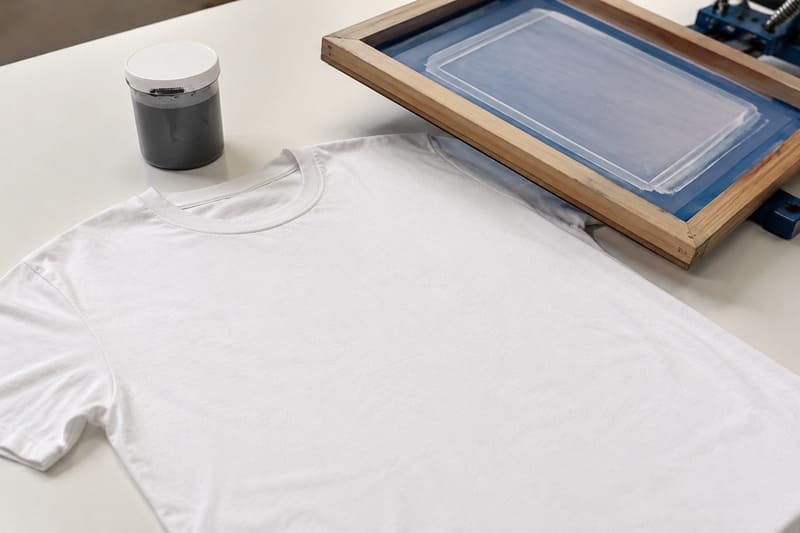
Think of it this way: the shirt itself already exists. It's a blank T-shirt or polo shirt that the factory has in stock. Your customization is the decoration — a screen print, embroidery, heat press, digital print, or some combination of these. The factory takes the blank, applies your artwork according to your specifications, does a quality check, and ships it out.
This is sometimes called a "logo-on-blank" order or simply a decorated stock order.
What affects the timeline within that 5–15 day range?
Several factors push the lead time toward the shorter or longer end:
- Quantity: 50 pieces with a simple one-color screen print? That's closer to 5 days. 5,000 pieces with multi-location embroidery? You're looking at 12–15 days.
- Decoration method: Screen printing is generally faster for large runs. Embroidery takes longer per piece but offers a premium look. Digital printing handles complex, full-color artwork well but may need more setup time.
- Number of decoration positions: A single chest logo is quick. Front print, back print, sleeve print, and a neck label? That's four separate processes per shirt.
- Artwork readiness: If your artwork files are production-ready (high-resolution vectors, clear color specs), the factory can start immediately. If there's back-and-forth on artwork approval, that eats into your timeline.
| Decoration method | Typical speed | Best for |
|---|---|---|
| Screen printing | Fast for bulk runs | Simple designs, 1–3 colors |
| Embroidery | Moderate | Logos, professional/corporate look |
| Heat press / vinyl | Fast for small runs | Names, numbers, multi-color graphics |
| Digital printing (DTG/DTF) | Moderate | Full-color, photographic, complex artwork |
MOQ and color options
Just like ready-made blanks, semi-custom orders typically start at around 50 pieces MOQ. And because you're working from existing stock, you're choosing from the factory's available blank shirt colors — no custom fabric dyeing involved. That's a huge time-saver.
I've seen a lot of buyers use this approach for seasonal promotions, corporate events, or small e-commerce collections where they need branded products fast without the commitment of a fully custom run. It's a great middle ground between speed and personalization.
One tip from my side: always ask your factory for a pre-production sample or at least a photo mockup before mass decoration begins. It takes a day or two but can save you from a costly mistake — especially when you're matching specific Pantone colors[^2] or dealing with detailed embroidery.
How long does a fully custom shirt order take?
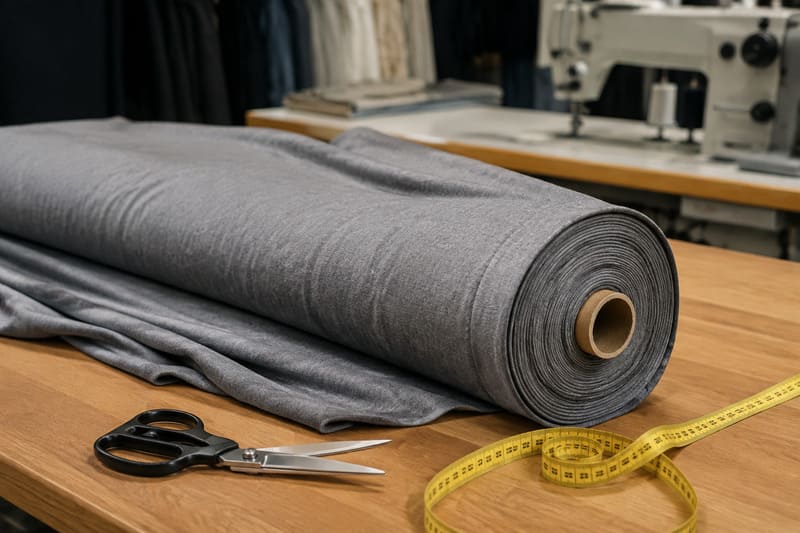
Now we're talking about the orders that make up the core of what I do every day. A fully custom order means everything is made to your exact specifications — the fabric, the color, the style, the decoration, the labels, the packaging. Nothing is pulled from existing stock. It's built from scratch.
Fully custom shirt orders generally require 30 to 50 days from order confirmation to shipment. These orders also come with higher MOQs, typically 300 to 3,000 pieces minimum, because the factory needs to source or dye fabric specifically for your order.
Why does it take 30–50 days?
Because a fully custom shirt order involves a complete production chain. Let me walk you through what actually happens during those weeks:
Step-by-step production breakdown
-
Fabric sourcing or dyeing (5–15 days): If you need a specific fabric weight, composition, or color that the factory doesn't have on hand, it needs to be ordered from the mill or dyed to match your Pantone reference. This is often the biggest chunk of lead time.
-
Pre-shrinking and fabric preparation (1–2 days): Good factories pre-shrink the fabric before cutting to prevent shrinkage issues in the finished product. This step is easy to overlook but critical for quality.
-
Cutting (1–3 days): Fabric is laid out, patterns are placed, and the pieces are cut according to your size specifications and grading.
-
Decoration — embroidery, printing, heat press (2–7 days): Depending on the method and complexity, this can be quick or time-consuming. Multi-color screen printing with multiple positions takes longer. Embroidery on thousands of pieces takes days.
-
Sewing (5–15 days): This is where the shirt actually comes together. Sewing time depends heavily on style complexity (a basic tee is faster than a polo with ribbed collar, button placket, and side vents) and quantity.
-
Ironing and finishing (1–2 days): Every piece gets pressed and cleaned up.
-
Quality inspection (2–4 days): At our factory, every single piece goes through 100% final inspection[^3]. We also do random inspections during sewing and do performance testing. This takes time but it's non-negotiable if you care about quality.
-
Packing and labeling (1–3 days): Custom poly bags, hang tags, care labels, carton markings — everything according to your packing instructions.
| Production stage | Estimated duration | Key variable |
|---|---|---|
| Fabric sourcing / dyeing | 5–15 days | Fabric availability, custom color |
| Pre-shrinking & prep | 1–2 days | Fabric type |
| Cutting | 1–3 days | Quantity, number of styles |
| Decoration | 2–7 days | Method, positions, complexity |
| Sewing | 5–15 days | Style complexity, quantity |
| Ironing & finishing | 1–2 days | — |
| Quality inspection | 2–4 days | Inspection standard |
| Packing | 1–3 days | Custom packing requirements |
| Total | ~30–50 days |
Why is the MOQ higher for fully custom orders?
It comes down to economics and practicality. When a factory dyes fabric to your specific color, there's a minimum dye lot[^4] — you can't dye 100 meters of fabric economically. When a screen printing setup is created for your design, there's a setup cost that needs to be spread across enough pieces to make sense. That's why fully custom orders typically start at 300–3,000 pieces per style per color.
What can push the timeline beyond 50 days?
- Fabric needs to be imported or is an unusual composition
- Multiple rounds of sample revisions before production approval
- Complex construction (think heavyweight hoodies with multiple panels, kangaroo pockets, custom zippers)
- Elaborate packaging requirements (custom boxes, tissue paper, inserts)
- Peak season congestion at the factory[^5]
I always tell my clients: the clearest, most detailed tech pack you can provide upfront saves more time than anything else. When a factory has to guess what you want — or when there's confusion about a specification — that's where delays creep in. Clear communication from day one keeps the timeline tight.
Does order quantity change how long a shirt order takes?
Absolutely. And I think this is one of the most underestimated factors in production planning. People often assume a factory's lead time is fixed, but quantity has a huge impact.
The quantity of your shirt order directly influences production scheduling, fabric sourcing, and decoration time. Within the common range of 50 to 100,000 pieces, doubling your quantity doesn't necessarily double your lead time — but it does extend it.
How quantity impacts each order type
| Order type | 50–500 pcs | 500–5,000 pcs | 5,000–100,000 pcs |
|---|---|---|---|
| Ready-made blanks | 1–3 days | 2–3 days | 3–5 days (stock permitting) |
| Semi-custom (logo on blank) | 5–7 days | 7–12 days | 12–15 days |
| Fully custom | Not typical at this volume | 30–40 days | 35–50 days |
Why doesn't time scale linearly with quantity?
Factories run multiple production lines simultaneously. So whether you order 3,000 or 6,000 shirts, the sewing time might only differ by a day or two — because multiple lines can work on your order at the same time.
The bottlenecks are usually in setup stages — fabric sourcing, screen preparation, embroidery digitizing, sample approval. These take roughly the same amount of time whether you're making 3,000 or 15,000 pieces. Once production actually starts on the factory floor, it moves faster than most buyers expect.
That said, if your order requires multiple styles, multiple colors, or multiple decoration methods, each variation adds setup time. An order of 10,000 pieces in one style and one color is faster than 10,000 pieces split across 5 styles in 4 colors each.
My advice? If timeline is critical, simplify wherever you can. Fewer colorways, fewer decoration positions, standard packaging — every simplification shaves days off your delivery schedule.
Frequently Asked Questions
Can I speed up my shirt order if I pay more?
Sometimes, yes. Factories can prioritize your order or add overtime shifts, but this depends on current production scheduling. Rush fees are common. However, some stages — like fabric dyeing — have fixed minimum timeframes that money can't shorten. Always discuss rush options with your factory before assuming it's possible.
Does the type of shirt affect production time?
Yes. A basic crew-neck T-shirt is the fastest to produce. Polo shirts with collars, button plackets, and ribbed cuffs take longer in sewing. Hoodies with zippers, pockets, and drawstrings add even more time. The more construction details, the longer the sewing stage.
What information should I give my factory to get an accurate lead time?
Provide your quantity per style and color, fabric specifications, decoration details (method, positions, colors), size breakdown, packaging requirements, and any compliance or testing needs. The more complete your tech pack, the more accurate and reliable your quoted lead time will be.
What's the biggest cause of shirt order delays?
In my experience, it's unclear or incomplete specifications at the start of the project. When requirements change mid-production, or when artwork isn't finalized before production begins, everything gets pushed back. Fabric supply issues are the second most common cause.
Should I always get a pre-production sample before mass production?
For fully custom orders, absolutely yes. It adds a few days to your overall timeline, but it lets you verify fit, color, fabric hand-feel, and decoration quality before thousands of pieces are made. Skipping the sample to save time is a false economy — it usually costs more in the end.
Conclusion
So, how long does a shirt order take? The honest answer is 3 to 50 days for common order quantities between 50 and 100,000 pieces. Ready-made blanks ship in days. Semi-custom logo orders take 1–2 weeks. Fully custom orders need a solid 30–50 days. The real key to hitting your target delivery date isn't just choosing the right order type — it's providing clear specifications, finalizing artwork early, and working with a factory that communicates transparently throughout the process.
[^1]: "Print on Demand – start your online business", https://printify.com/print-on-demand/. Market research reports indicate that the global print-on-demand market, which relies on decorating blank garments with custom designs upon order receipt, has grown significantly with e-commerce expansion, representing a substantial segment of the custom apparel industry. Evidence role: general_support; source type: research. Supports: Print-on-demand apparel businesses rely on decorating pre-existing blank garments with customer-specified designs, aligning with the semi-custom order model described.. Scope note: Print-on-demand typically operates at single-unit or very small batch sizes, which may differ from the 50+ piece MOQ semi-custom model described in the article. [^2]: "Textile Color Systems for Fashion", https://www.pantone.com/na/en-us/color-systems/for-textiles?srsltid=AfmBOoo6PUj1JrOhsahe7nhmES1OkpYYyUlclRA3DvqMzozN_XheNzMI. The Pantone Matching System (PMS), developed by Pantone LLC, is a proprietary standardized color reproduction system widely used across the textile and apparel industries; its Textile Paper eXtended (TPX) and Textile Cotton eXtended (TCX) guides provide specific color references for fabric dyeing and printing. Evidence role: definition; source type: encyclopedia. Supports: The Pantone Matching System is the industry-standard color communication tool used in textile and apparel manufacturing to ensure consistent color reproduction.. Scope note: While Pantone is the dominant standard, some manufacturers also use alternative systems or brand-specific color standards. [^3]: "AQL vs 100% Inspection: Which Quality Control Method ...", https://www.testcoo.com/en/blog/aql-vs-full-inspection-which-quality-control-method-is-right-for-you. The apparel industry commonly uses AQL-based statistical sampling per ISO 2859-1 for final inspection; 100% inspection, where every unit is individually examined, exceeds this standard but is practiced by some manufacturers to minimize defect rates reaching the end customer. Evidence role: general_support; source type: institution. Supports: 100% inspection means every unit is individually checked, which is a more rigorous approach than the statistically-based AQL (Acceptable Quality Level) sampling method commonly used in the apparel industry.. Scope note: 100% inspection does not guarantee zero defects, as inspector fatigue and human error remain factors; its cost-effectiveness compared to AQL sampling is debated. [^4]: "Batch dyeing", https://en.wikipedia.org/wiki/Batch_dyeing. Textile engineering references indicate that commercial dyeing machines have minimum load requirements, typically ranging from several hundred to several thousand meters of fabric, below which consistent color matching and cost efficiency cannot be achieved. Evidence role: mechanism; source type: education. Supports: Textile dyeing operations require minimum batch sizes due to the chemistry of dye baths, machine capacity, and the cost of water, energy, and chemicals per run.. Scope note: Exact minimum dye lot sizes vary by dyeing method (jet, beam, pad), fabric type, and specific mill capabilities. [^5]: "Apparel Manufacturing: NAICS 315", https://www.bls.gov/iag/tgs/iag315.htm. Apparel industry analyses note that garment factories in major manufacturing regions experience peak production periods, typically from June through October for holiday and spring retail seasons, during which capacity utilization can exceed 90% and lead times may extend by 20–50% compared to off-peak periods. Evidence role: general_support; source type: research. Supports: Garment factories experience seasonal capacity constraints, particularly before major retail seasons, which can significantly extend lead times.. Scope note: Peak seasons vary by market (e.g., Western retail vs. regional holidays) and by factory specialization; some factories manage capacity more effectively than others.