
If you've ever asked a factory "how much does it cost to manufacture a t-shirt," you've probably heard the same answer: "it depends." That may sound vague, but after running production lines since 2006, I can say it is usually the most accurate answer. The cost changes with the specifications of the shirt and the way the order is produced.
For bulk factory production, the cost to manufacture a t-shirt often falls somewhere between $1.50 and $10 per piece, based on the types of orders we see. The factory price depends mainly on fabric type and weight, size ratio, order quantity, logo decoration method, trims, and packaging. International shipping is separate and affects the landed cost rather than the manufacturing cost itself.
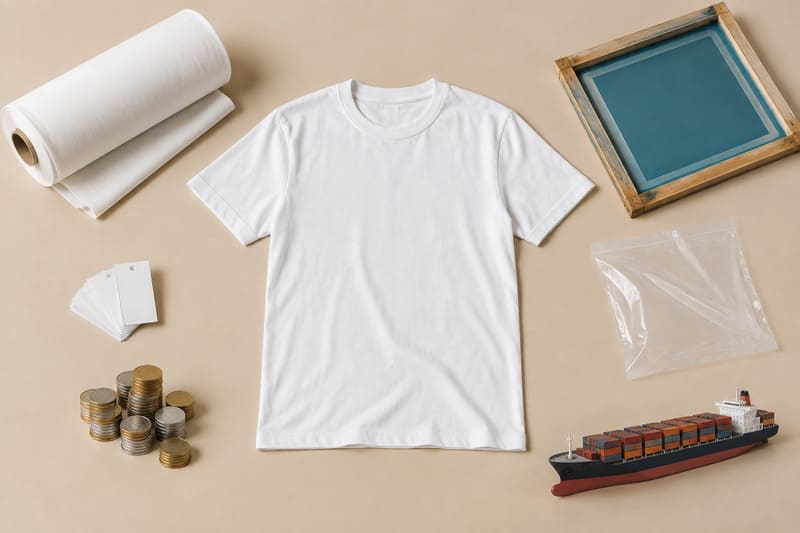
Where a specific t-shirt falls within that range depends on each of these factors.
How does fabric affect t-shirt manufacturing cost?
Two t-shirts can look almost identical in a photo but have very different production costs because of the fabric.
Fabric is one of the biggest drivers of t-shirt production cost. Three things matter: the material (cotton, polyester, blends, viscose, lyocell, bamboo), the weight in GSM (140 to 400+), and any finishing treatments such as water-repellent finishes, anti-bacterial treatments, or garment washing. Heavier fabrics and special finishes generally increase the cost, all else being equal.
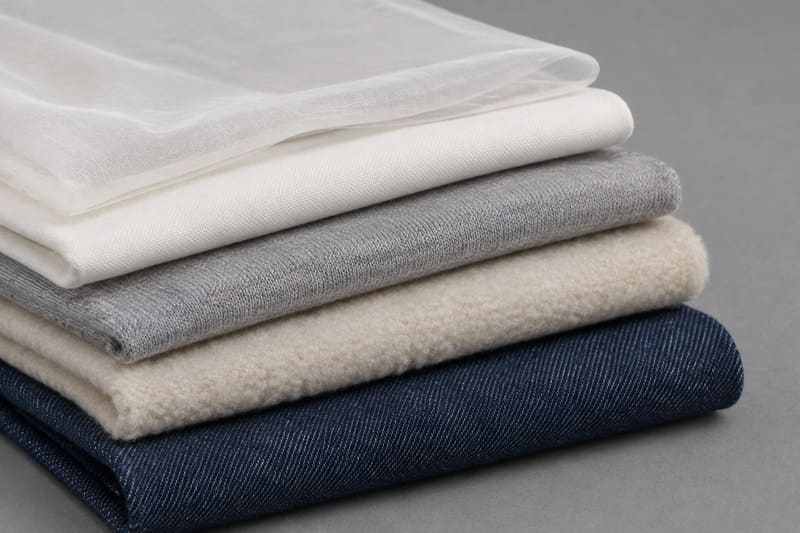
Fabric itself is a very large topic, so I will keep this section focused on the factors that matter most when you are comparing factory quotations.
Material type
Common t-shirt materials include:
- 100% cotton — the classic choice, usually mid-range in price
- 100% polyester — often a lower-cost option, popular for sportswear and promotional products
- Poly-cotton blends — a balance of cost and feel
- Viscose (rayon) — soft drape, moderate price
- Lyocell and bamboo fiber — premium feel, premium price
- Fabrics with spandex — add stretch and usually add cost
The price gap between these materials can be significant. A basic polyester tee and a lyocell tee are simply not in the same price range.
Fabric weight (GSM)
Same material, different thickness, different price. Common weights we produce include 140, 180, 210, 260, 280, 300, 320, and 400 GSM, and heavyweight styles can go beyond 400 GSM.
For the same material and fabric area, higher GSM means more fabric weight and generally more raw material cost. For example, 260 GSM fabric weighs about 1.86 times as much per square meter as 140 GSM fabric.
Finishing treatments
Post-treatment also affects the price. Water-repellent finishes, anti-bacterial treatments, vintage washing, enzyme washing, and sand washing all add processing steps and cost.
A garment-washed heavyweight tee, for example, can cost substantially more than a basic untreated t-shirt even when the basic construction is similar.
Does t-shirt size change the unit price?
A common question is whether a 3XL should cost more than a Small.
In theory, bigger sizes cost more because they use more fabric — a 3XL clearly needs more material than an S. In practice, many factories quote one blended price across a standard size range based on the average fabric consumption of the whole size breakdown. Extended sizes may still carry a surcharge, depending on the factory and the order mix.
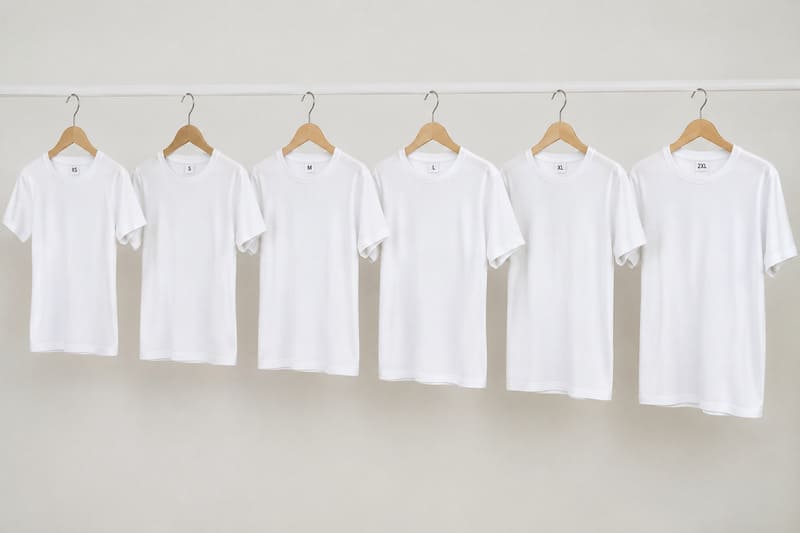
In our case, when we cost a t-shirt order, we calculate the average fabric consumption across the whole size breakdown and quote one price for the sizes included in that quote.
That means the size ratio of the order still affects the final number.
| Order Size Mix | Avg. Fabric Use | Relative Unit Price |
|---|---|---|
| Mostly S–M | Low | Lowest |
| Balanced S–2XL | Medium | Standard |
| Mostly 2XL–4XL | High | Highest |
A few practical points when requesting a quote:
- Always send your size ratio with your inquiry. A quote without it is only an estimate.
- Avoid changing the size ratio after the quotation is confirmed. I've seen buyers change an order from mostly medium sizes to mostly 2XL and then wonder why the price changed. The reason is simply higher average fabric consumption.
Why does order quantity lower the cost per t-shirt?
The unit price for 100 pieces can be very different from the price for 10,000 pieces. The reason is not only material purchasing. A large part of the difference comes from how fixed and semi-fixed production costs are spread across the order.
Order quantity has a major effect on t-shirt unit cost because many setup costs do not increase in direct proportion to the number of pieces produced. Pattern-making, embroidery digitizing, and screen-printing setup, for example, may cost roughly the same whether you make 100 pieces or several thousand. Spread over more pieces, those costs become much smaller on a per-unit basis, which is one reason larger orders usually have lower unit prices.[^1]
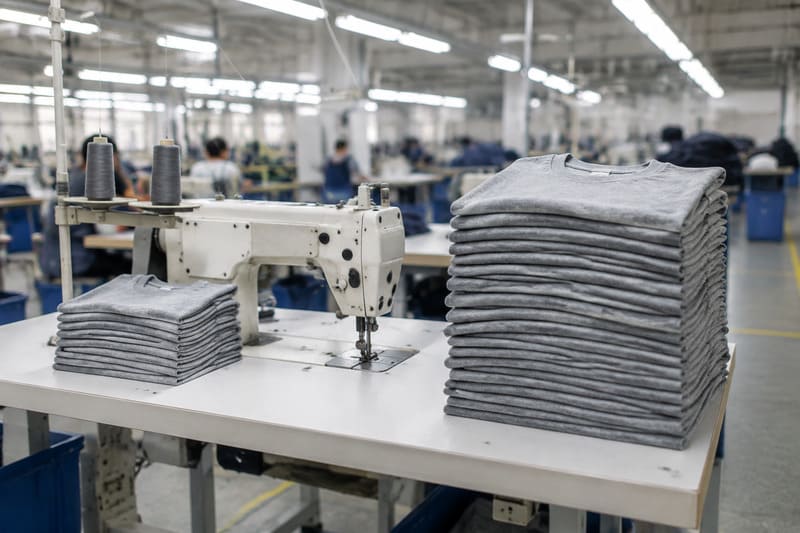
The savings usually come from several parts of the production process. If you want to see the full workflow, I explained it in how a clothing factory works.
Fixed setup costs get diluted
Custom orders often involve one-time setup costs:
- Garment pattern-making fee — paid once per style
- Embroidery digitizing fee — paid once per logo
- Screen-printing setup fee — paid once per design
These setup fees are often the same whether the order is 100 pieces or 10,000.
For example, divide a $100 setup fee by 100 pieces and it adds $1.00 per shirt. Divide the same $100 by 10,000 pieces and it adds only one cent per shirt.
Cutting is a batch process
Cutting also benefits from volume. Depending on the fabric, lay height, and equipment, cutters can often process a much larger quantity with only a modest increase in labor.
As a result, the cutting cost per piece normally drops as the order gets bigger.
Sewing gets faster with volume
On a large order, sewing operators repeat the same operations hundreds or thousands of times. As they repeat the work, their efficiency generally improves,[^2] so hourly output can increase and unit labor cost can fall.
With a very small order, the production run may finish before the same level of efficiency is reached.
Purchasing, cutting, sewing, and decoration can all benefit from larger production runs. That's why quantity is one of the first pieces of information a factory needs before giving an accurate quotation.
How does the logo printing method change t-shirt cost?
Two orders using the same blank t-shirt can have very different final prices because of the decoration.
Each decoration method has its own pricing logic. Screen-printing cost is strongly affected by the number of colors and setup required. DTF and digital printing are usually affected by print size and coverage. Embroidery is heavily influenced by stitch count. The colors, dimensions, placement, and complexity of the artwork can therefore make a noticeable difference to the final cost.
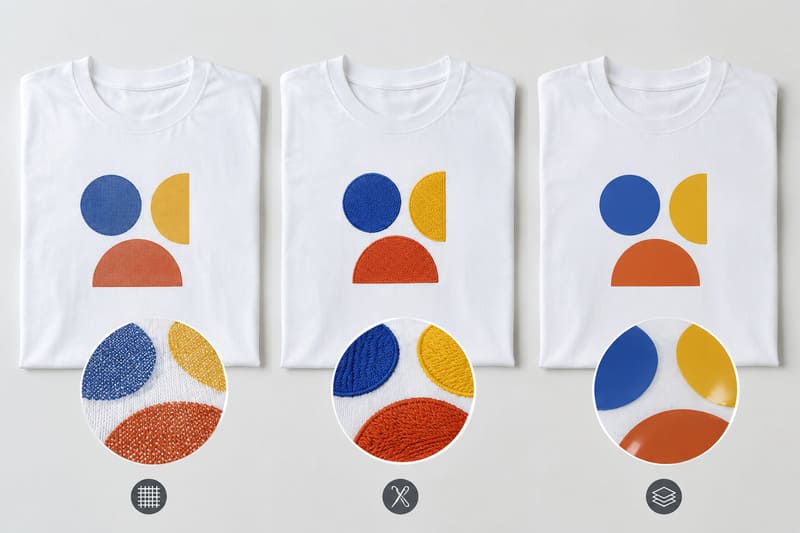
For a detailed comparison, see t-shirt printing methods and how to choose the right one. Here I'll focus only on how each method affects cost.
| Method | Cost Driver | Best For |
|---|---|---|
| Screen printing | Number of colors & setup | Large orders, simple designs |
| Embroidery | Stitch count | Premium look, polos, chest logos |
| DTF / heat transfer | Print size | Full-color designs, small orders |
| Digital printing (DTG) | Print size & coverage | Photo-quality artwork |
In practice, the main cost differences are straightforward:
- A one-color screen print is relatively inexpensive. A six-color print is not. Screen printing applies one ink color at a time, so multi-color artwork normally requires separate color separations and screens.[^3]
- Embroidery cost increases with stitch count. A small, clean chest logo might be around 5,000 stitches, while a large detailed back design can reach 50,000 stitches or more.
- DTF is largely size-driven. A pocket-sized transfer costs much less than a full-front print.
- Placement matters. Adding a second or third print location means additional decoration work and additional cost.
When requesting a quotation, send the actual artwork whenever possible. A description such as "one logo on the chest" leaves too much room for interpretation. With the artwork, the factory can evaluate the correct decoration method, size, number of colors, and production cost.
What do trims and packaging add to t-shirt cost?
Trims and packaging may look like small details, but they can add a noticeable amount to the final quotation, especially when the buyer has specific branding or retail packaging requirements.
Trims and packaging costs vary widely because the options are nearly endless. Care labels can use different materials and printing methods, while branding may also involve woven labels or heat-transfer neck labels. Packaging ranges from basic OPP or PE bags to printed retail boxes and more sustainable materials — and each choice carries a different cost.
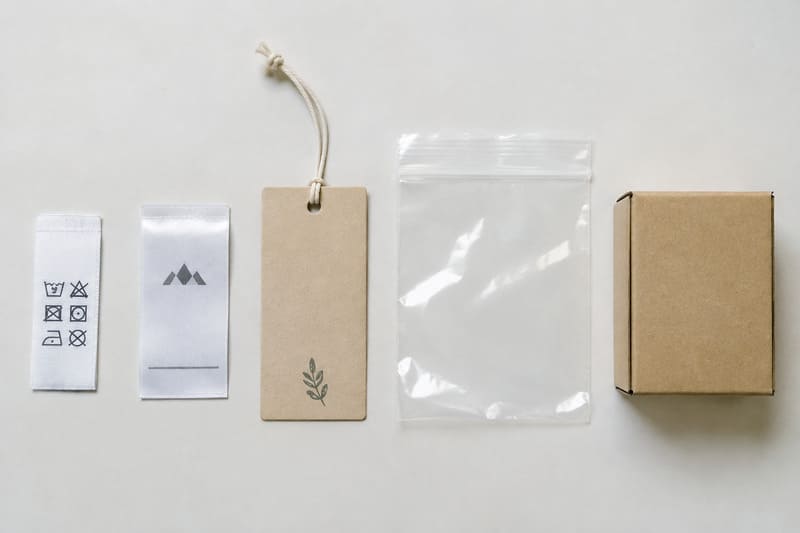
There are far more label and packaging combinations than most buyers expect.
Labels and tags
- Materials: 100% polyester, 100% cotton, and poly-cotton blends
- Options: printed care labels, woven brand labels, and heat-transfer or tagless neck labels
- A basic printed satin label can cost very little per piece at volume. A high-density woven label with a custom loop fold costs noticeably more.
- Hang tags, price stickers, and barcode labels each add additional cost.
Packaging
- Poly bags: OPP bags, PE bags, printed or plain, with or without warning text
- Boxes: plain export cartons vs. printed retail-ready boxes
- Sustainability requirements: FSC-certified paper, biodegradable bags, and recycled materials are increasingly common requests from our European clients, and these options can cost more than standard packaging.
Packaging requirements in Europe are also becoming stricter. The EU's Packaging and Packaging Waste Regulation (PPWR) began applying across the European Union in August 2026 and establishes common rules covering the packaging life cycle and packaging waste.[^4]
There is no single standard cost for trims and packaging. If you're comparing quotations from two factories, make sure both are quoting the same label specifications and packaging requirements. Otherwise, a lower price may simply reflect cheaper trims or simpler packaging.
How much does shipping add to the landed cost of a t-shirt?
Shipping is separate from the manufacturing price, but it can make a major difference to the final landed cost.
For international orders, the two most common options are sea freight and air freight. Sea freight normally has a much lower cost for larger shipments but takes longer. Air freight is much faster, but it is generally more expensive.[^5]
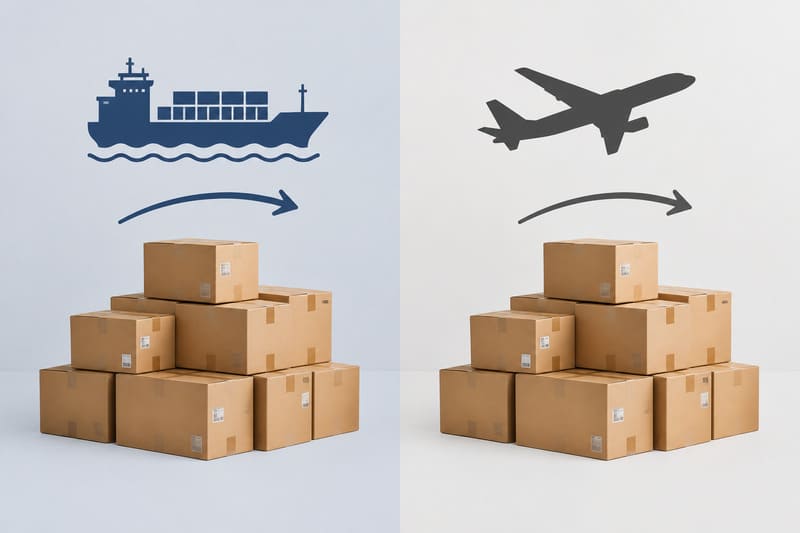
The following is a rough example based on the kind of shipments we regularly send from our factory to the United States.
| Shipping Method | Approx. Cost per T-Shirt | Typical Transit Time |
|---|---|---|
| Sea freight | $0.50–$0.80 | 30–35 days |
| Air freight | $2.00–$3.00 | 7–15 days |
These figures are only rough examples. Actual freight rates change with shipment volume, destination, season, fuel costs, and the shipping service used.
Imagine the factory cost of your t-shirt is $4.00.
If sea freight adds another $0.60 per piece, the cost becomes roughly $4.60 before import duties, customs clearance, and other destination charges — unless the freight quote is an all-in DDP (Delivered Duty Paid) rate.
If air freight adds $2.50 per piece, the same shirt becomes roughly $6.50 before those additional import and destination charges, unless they are already included in the shipping rate.
The t-shirt itself has not changed. Only the shipping method has.
When comparing factory quotations, always check:
Does this price include shipping, or is it only the factory price?
Two quotations can appear very different simply because they are based on different shipping terms.
Example T-Shirt Manufacturing Cost
Here is a simplified example based on a typical order we handle:
| Specification | Example |
|---|---|
| Fabric | 100% cotton |
| Fabric weight | 180 GSM |
| Quantity | 500 pcs |
| Decoration | 1-color chest screen print |
| Labels | Standard neck and care labels |
| Packaging | Individual poly bag |
| Factory price | About $3.50 per piece |
For this type of order, a factory price of around $3.50 per piece would be a reasonable reference.
If the quantity increased to 1,000 pieces, the unit price would normally come down because setup and production costs are spread across more pieces.
If you changed the fabric to a heavier GSM, added more print colors, or upgraded the labels and packaging, the price would normally move in the opposite direction.
This is only an example, not a universal price. The final quotation still depends on the exact fabric, size ratio, artwork, construction, trims, and order requirements.
So how much does it actually cost to manufacture a t-shirt?
There is no standard answer because every t-shirt specification is different.
Based on the types of bulk orders we handle, a factory price of roughly $1.50 to $10 per piece is a useful general reference. The exact manufacturing cost can only be determined once the factory knows exactly what kind of t-shirt you want to make.
International freight, import duties, customs clearance, and other destination costs should then be considered separately when calculating your final landed cost.
[^1]: OpenStax, "Costs in the Long Run," Principles of Microeconomics 3e. https://openstax.org/books/principles-microeconomics-3e/pages/7-5-costs-in-the-long-run
[^2]: Purdue University, "The Effect of Learning Curve on Production." https://business.purdue.edu/news/features/Learning-Curve.php
[^3]: ScreenPrinting.com, "How to Screen Print T-Shirts." https://help.screenprinting.com/en-US/how-to-screen-print-t-shirts-114141
[^4]: European Commission, "New EU rules on packaging enter into application," August 11, 2026. https://environment.ec.europa.eu/news/new-eu-rules-packaging-enter-application-2026-08-11_en
[^5]: Freightos, "Air Freight vs Sea Freight: Cost, Shipping, Carbon Footprint & More," updated September 16, 2026. https://www.freightos.com/freight-resources/air-freight-vs-ocean-freight-making-the-decision/