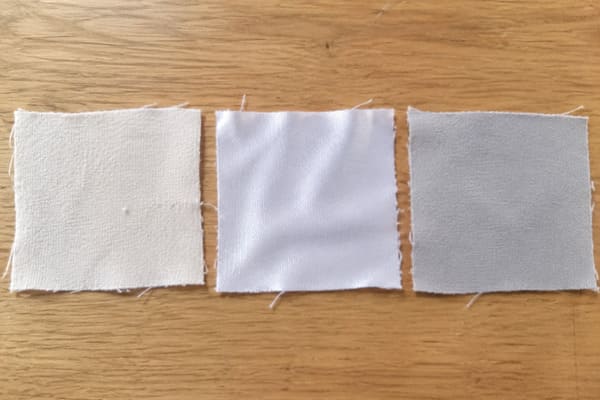
The most common T-shirt fabrics we work with are 100% cotton, 100% polyester, and blends of different fibers. Each has its own advantages, depending on how the T-shirt will be used, the required hand feel, and the printing method.
100% cotton is widely used for casual and retail T-shirts, while polyester is a common choice for sportswear and sublimation printing. Blended fabrics offer a combination of properties such as softness, dimensional stability, durability, and stretch. However, fiber composition alone is not enough to determine the quality or suitability of a T-shirt fabric.
For bulk T-shirt orders, fabric weight, knit structure, yarn type, and finishing are just as important as fiber composition. Understanding these specifications will help you communicate your requirements more accurately with your manufacturer.
Why Should You Think Beyond Fiber Names When Choosing T-Shirt Fabric?
A fabric specification such as "100% cotton, 180 gsm" tells us the composition and weight of the fabric, but it does not fully describe how the finished T-shirt will look or feel.
Two T-shirts made from 180 gsm cotton jersey can have noticeably different levels of softness, surface smoothness, and dimensional stability.
Fiber Composition, Knit Structure, Yarn Type, and Finishing
There are four main aspects of a fabric specification that buyers should understand.
| Fabric Specification | What It Affects | Common Examples |
|---|---|---|
| Fiber Composition | Moisture absorption, hand feel, durability, decoration compatibility | Cotton, polyester, rayon, elastane |
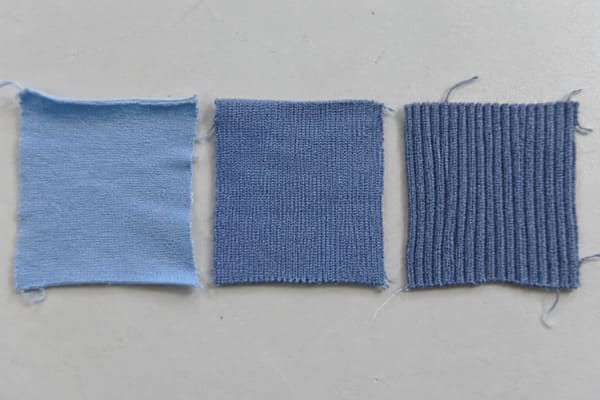
| Knit Structure | Texture, thickness, stretch, drape | Single jersey, interlock, rib, mesh |
| Yarn Type | Surface smoothness, softness, strength, pilling performance | Ring-spun, open-end, combed |
| Finishing | Dimensional stability, surface appearance, functional performance | Pre-shrinking, enzyme washing, moisture-wicking finish |
These specifications work together. Changing one of them can affect the finished fabric even when the composition and GSM remain the same.
Common Knit Structures Used in T-Shirts
Single jersey is the most common knit structure for regular T-shirts, but other structures are used depending on the intended appearance and performance.
| Knit Structure | Main Characteristics | Typical Applications |
|---|---|---|
| Single Jersey | Relatively lightweight, flexible, smooth on the face side | Casual T-shirts, promotional T-shirts, retail basics |
| Interlock | Double-knit construction, smooth on both sides, generally more substantial than single jersey | Premium basics, structured T-shirts, sportswear |
| Rib Knit | Pronounced vertical ribs, good crosswise extensibility | Neckbands, fitted T-shirts, stretch tops |
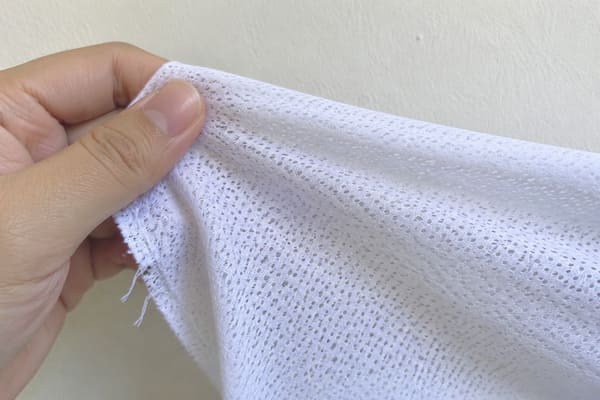
| Birdseye / Mesh | Textured or open construction that can improve airflow | Sportswear, performance T-shirts, uniforms |
The same fiber can be used to produce several different knit structures. A 100% polyester single jersey fabric, for example, may perform and feel quite differently from a polyester birdseye mesh fabric.
What Is the Difference Between Combed and Ring-Spun Cotton?
Combed cotton and ring-spun cotton are often mentioned together, but they describe different stages of yarn production.
- Combed cotton: Cotton fibers undergo an additional combing process to remove shorter fibers and impurities, helping produce a more uniform and smoother yarn.
- Ring-spun cotton: Cotton fibers are twisted into yarn using the ring-spinning process.
- Open-end cotton: Cotton yarn produced through open-end rotor spinning, commonly used in economical T-shirt fabrics.
A cotton yarn can be both combed and ring-spun. Ring-spun cotton, however, is not necessarily combed.
For T-shirts that require a smoother printing surface or a softer hand feel, combed ring-spun cotton is often a suitable starting point.
Does Higher GSM Mean Better Fabric Quality?
GSM stands for grams per square meter. It measures the mass of a fabric per unit area.
A 280 gsm fabric is heavier than a 180 gsm fabric, but that does not necessarily mean it is better.
GSM alone does not tell you:
- The quality of the yarn.
- How smooth or soft the fabric feels.
- How resistant it is to pilling.
- How much it will shrink after washing.
- How well it will perform during printing.
- How well the finished garment will retain its shape.
A lightweight 160 gsm cotton T-shirt made with good-quality yarn can be a better product than a heavyweight 300 gsm T-shirt made with poor-quality yarn.
Use GSM to specify the weight of the fabric, and evaluate its quality separately according to the requirements of your product.
When Should You Choose 100% Polyester T-Shirt Fabric?
100% polyester is commonly used for performance T-shirts, sportswear, promotional clothing, and sublimation-printed garments. Its low moisture absorption, dimensional stability, and compatibility with sublimation make it particularly suitable for these applications.
Advantages of Polyester Fabric
Moisture management
Polyester fibers absorb very little moisture. When combined with suitable yarns, knit structures, or moisture-wicking finishes, polyester fabrics can transport sweat away from the skin and dry relatively quickly.
This is why polyester birdseye mesh and other performance knits are commonly used in sportswear.
However, not every polyester fabric has good moisture-wicking performance. If this is an important product requirement, it should be specified separately.
Dimensional stability
Polyester generally offers good dimensional stability and wrinkle resistance compared with conventional cotton fabrics. These properties can be useful for uniforms, sportswear, and garments that require frequent washing.
Compatibility with sublimation printing
Polyester is particularly suitable for conventional dye-sublimation printing. During the heat transfer process, disperse dyes penetrate the polyester fibers, producing prints without a separate, raised ink layer.
For full-color, all-over printed T-shirts, 100% polyester is usually the first fabric to consider. White or light-colored polyester provides the most flexibility because conventional sublimation does not print an opaque white base.
Limitations of Polyester Fabric
Dye migration during printing
Polyester can be screen printed, but the ink and curing conditions need to be selected carefully.
During heat curing, dyes in the polyester fabric may migrate into the printed ink layer. This can cause discoloration, particularly when printing white or light-colored designs onto dark fabrics.
Avient's technical guidance on printing polyester explains the importance of selecting suitable inks, controlling curing conditions, and testing the fabric before production.
Hand feel
Polyester fabrics vary considerably in hand feel. Some have a smooth, lightweight surface, while others feel more textured or synthetic.
If you are developing a retail T-shirt intended to have a natural cotton-like feel, it is worth comparing different polyester fabrics or considering a blend.
Common Applications of Polyester T-Shirt Fabric
| Application | Suitable Fabric | Indicative GSM |
|---|---|---|
| Dry-fit sports T-shirts | Polyester birdseye or moisture-wicking jersey | 120–180 gsm |
| Running and training T-shirts | Lightweight polyester mesh | 110–160 gsm |
| All-over sublimation T-shirts | Polyester jersey or interlock | 130–200 gsm |
| Promotional T-shirts | Standard polyester jersey | 120–160 gsm |
| Sports uniforms | Polyester performance knit | 140–220 gsm |
These weight ranges are general sourcing references rather than fixed industry standards.
For compression garments, polyester/elastane or nylon/elastane blends are generally more appropriate than standard 100% polyester fabrics because they provide the stretch and recovery required for a close-fitting garment.
Is 100% Cotton the Best T-Shirt Fabric?
100% cotton is one of the most widely used fabrics for casual T-shirts, retail basics, promotional apparel, and streetwear. It offers a natural hand feel, good moisture absorption, and compatibility with many decoration methods. Whether it is the best choice depends on the intended use of the garment.
Common Cotton T-Shirt Fabric Weights
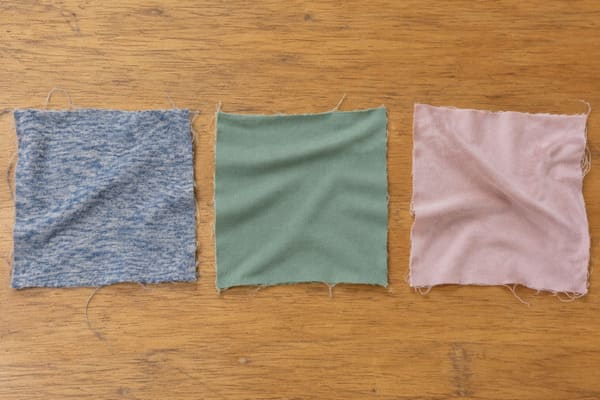
Cotton T-shirt fabrics are available in a wide range of weights, from lightweight summer jersey to heavyweight fabrics used in oversized streetwear.
| Weight Category | Indicative GSM | Typical Application |
|---|---|---|
| Lightweight | 120–170 gsm | Summer T-shirts, undershirts, lightweight promotional apparel |
| Midweight | 170–220 gsm | Everyday T-shirts, retail basics, branded merchandise |
| Heavyweight | 220–280 gsm | Premium basics, structured T-shirts, streetwear |
| Extra Heavyweight | 280–380+ gsm | Oversized T-shirts, heavyweight streetwear |
There is no universal standard defining these weight categories. Different manufacturers and brands may use different classifications.
Heavier fabrics tend to provide a more substantial feel and may help create a structured silhouette. The final appearance also depends on the yarn, knit construction, finishing, and garment pattern.
Advantages of Cotton Fabric
Natural hand feel
Cotton is often selected for casual T-shirts because of its natural feel against the skin. Combed ring-spun cotton can provide a particularly smooth surface for both wearing and printing.
Decoration compatibility
Cotton works well with many common decoration methods, including:
- Screen printing.
- Direct-to-garment printing (DTG).
- Direct-to-film printing (DTF).
- Heat transfer printing.
- Embroidery.
If the decoration method has not yet been finalized, cotton generally offers considerable flexibility.
Comfort and moisture absorption
Cotton absorbs moisture and can be comfortable for everyday wear. Its breathability depends partly on the fabric weight and knit construction.
Because cotton retains absorbed moisture, it may take longer to dry than polyester performance fabrics. This is one reason polyester is often preferred for intensive sports activities.
Limitations of Cotton Fabric
Shrinkage
Cotton knitted fabrics can shrink during washing, particularly if the fabric has not been adequately stabilized during production.
The actual shrinkage rate depends on the yarn, knit construction, finishing process, and laundering conditions. Pre-shrinking can reduce dimensional changes, but it does not guarantee that the finished garment will have zero shrinkage.
The AATCC TM135 test method measures dimensional changes in fabrics after home laundering, while AATCC TM150 addresses dimensional changes in finished garments.
For bulk orders, it is more useful to agree on an acceptable shrinkage tolerance and testing method than to assume a standard shrinkage percentage for all cotton fabrics.
Pilling
Cotton fabrics can develop small fiber balls on the surface during wear and washing.
Yarn quality, fiber length, knit construction, and finishing all influence pilling performance. Selecting a smoother yarn may help, but the finished fabric should be tested if pilling resistance is an important quality requirement.
Wrinkling
Cotton generally wrinkles more easily than polyester. This may be a consideration for garments that are packed for long-distance shipping or displayed directly on retail shelves.
A cotton-polyester blend can be worth considering when wrinkle resistance is more important than maintaining a 100% cotton composition.
Color fastness
The color fastness of cotton depends on the dyeing process, dye selection, and finishing.
For dark or highly saturated colors, washing and rubbing fastness should be checked against the buyer's quality requirements.
What Are Blended T-Shirt Fabrics?
Blended T-shirt fabrics combine two or more fibers to achieve a particular combination of properties. Common examples include cotton-polyester blends, cotton-elastane blends, and tri-blends made from cotton, polyester, and rayon.
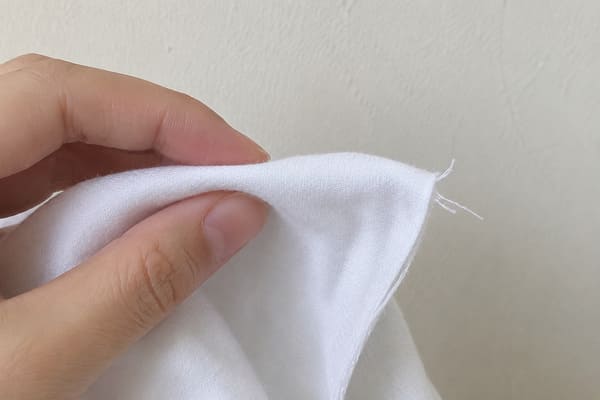
The purpose of blending fibers is not necessarily to reduce cost. Depending on the composition, a blend may be selected to improve dimensional stability, softness, stretch, durability, or drape.
Common Types of Blended T-Shirt Fabric
| Fabric Type | Example Composition | Main Characteristics | Typical Applications |
|---|---|---|---|
| CVC | 60% Cotton / 40% Polyester | Cotton-rich hand feel, improved dimensional stability | Retail T-shirts, uniforms |
| TC | 65% Polyester / 35% Cotton | Good durability, wrinkle resistance, relatively easy care | Workwear, promotional T-shirts |
| Tri-blend | 50% Polyester / 25% Cotton / 25% Rayon | Soft hand feel, good drape | Fashion T-shirts, premium merchandise |
| Cotton / Elastane | 95% Cotton / 5% Elastane | Stretch and improved recovery | Fitted T-shirts, fashion basics |
| Polyester / Elastane | 92% Polyester / 8% Elastane | Stretch, recovery, performance-oriented construction | Activewear, fitted sportswear |
| Cotton / Nylon | 90% Cotton / 10% Nylon | Potential improvement in strength and abrasion resistance | Specialty apparel |
| Cotton / Modal | 60% Cotton / 40% Modal | Softness and fluid drape | Premium casual T-shirts |
| Cotton / Lyocell | 70% Cotton / 30% Lyocell | Smooth hand feel, moisture absorption, soft drape | Premium fashion T-shirts |
The compositions listed above are examples. Actual blend ratios vary depending on the fabric design and supplier.
What Is the Difference Between CVC and TC Fabric?
CVC and TC are two common cotton-polyester blends used in T-shirt manufacturing.
CVC (Chief Value Cotton) generally refers to a blend in which cotton accounts for the larger proportion of the fiber content. Common examples include 60% cotton / 40% polyester and 65% cotton / 35% polyester.
TC (Polyester-Cotton) commonly refers to a polyester-rich blend, such as 65% polyester / 35% cotton.
CVC is often selected when the buyer wants to retain more of the cotton hand feel while improving dimensional stability and ease of care.
TC is commonly used for uniforms, workwear, and promotional garments where durability, wrinkle resistance, and cost are important considerations.
When ordering either fabric, specify the exact fiber percentages rather than relying on the terms CVC or TC alone.
What Is a Tri-Blend T-Shirt Fabric?
A tri-blend fabric contains three different fibers. In T-shirt manufacturing, the most common combination is polyester, cotton, and rayon.
One widely used composition is:
- 50% Polyester.
- 25% Cotton.
- 25% Rayon.
Rayon contributes to the soft hand feel and fluid drape, while cotton and polyester contribute other properties to the finished fabric.
Tri-blends are often used for fashion T-shirts and premium branded merchandise. They are also available in heathered colors, although a heathered appearance is not exclusive to tri-blend fabrics.
When Should You Choose a Blended Fabric?
A blended fabric can be useful when a single fiber does not provide all the characteristics required for a particular product.
For example, if you want a cotton-rich T-shirt but need better dimensional stability and wrinkle resistance, a CVC fabric may be a suitable alternative to 100% cotton.
If you are developing a fitted fashion T-shirt that needs to recover its original shape after stretching, a cotton-elastane blend may be more appropriate.
For a lightweight fashion T-shirt with a softer drape, cotton-modal or tri-blend fabrics are worth considering.
Lyocell blends are another option for buyers looking for a smooth, soft fabric. Some branded lyocell fibers, such as TENCEL™ Lyocell from Lenzing, are produced using a closed-loop solvent recovery process. However, environmental claims about the finished T-shirt should be supported by the actual fiber source and relevant documentation.
Which T-Shirt Fabrics Work Best with Different Printing Methods?
If your T-shirt requires printing or embroidery, the decoration method should be considered before the fabric specification is finalized.
Some combinations are straightforward, while others require specific inks, pretreatments, transfer materials, or production settings.
| Decoration Method | 100% Cotton | 100% Polyester | Blended Fabrics |
|---|---|---|---|
| Screen Printing | Generally suitable | Requires attention to dye migration and curing conditions | Generally suitable with appropriate inks |
| DTG Printing | Usually preferred | Requires compatible equipment, inks, and pretreatment | Depends on composition and printing system |
| DTF Printing | Suitable | Suitable with appropriate transfer materials and heat settings | Generally suitable |
| Sublimation | Not suitable for conventional direct dye-sublimation | Preferred, especially white or light-colored fabrics | Depends mainly on polyester content |
| Heat Transfer Vinyl | Generally suitable | Requires compatible transfer materials | Generally suitable |
| Embroidery | Suitable with appropriate backing | Suitable with appropriate backing | Depends on fabric thickness and stretch |
Screen Printing
Cotton and cotton-rich blends are generally straightforward choices for screen printing.
For detailed artwork, a smooth and consistent fabric surface is particularly important. Yarn quality and surface hairiness can affect print definition more directly than fabric weight alone.
When printing on polyester or polyester-rich blends, the ink formulation and curing temperature should be selected to minimize dye migration.
DTG Printing
Cotton is generally a preferred substrate for direct-to-garment printing because many DTG printing systems are designed around cotton-based garments.
However, polyester and blended fabrics are not necessarily excluded.
For example, Epson provides specific pretreatment and printing recommendations for polyester and cotton-polyester garments.
The suitability of a fabric for DTG should therefore be determined according to the actual printing equipment, inks, and pretreatment process rather than a fixed minimum cotton percentage.
DTF Printing
Direct-to-film printing offers considerable flexibility because the design is transferred from a printed film onto the garment using heat and adhesive.
It can be used on cotton, polyester, and many blended fabrics.
For polyester fabrics, particularly dark colors, suitable transfer materials and heat settings are important to reduce dye migration and heat-related surface changes.
For stretch fabrics, the flexibility and durability of the transfer should also be considered.
Sublimation Printing
For conventional dye-sublimation printing, white or light-colored polyester is generally the most suitable choice.
Cotton-polyester blends can also be sublimated, but only the polyester portion accepts the sublimation dye effectively. The result may have a lighter or vintage appearance compared with printing on 100% polyester.
If your design requires bright colors and full-coverage printing, 100% polyester is usually the better starting point.
Embroidery
Most T-shirt fabrics can be embroidered, but lightweight and highly stretchable fabrics require particular attention.
The design size, stitch density, fabric stability, and backing material all affect the appearance of the finished embroidery.
A large, dense embroidered design on lightweight jersey, for example, may cause puckering or distort the fabric around the design.
How Does Fabric Choice Affect Your Lead Time and Cost?
Fabric availability is an important consideration in bulk T-shirt manufacturing, especially when the buyer has a fixed delivery date.
Fabric Availability and Sourcing Time
Standard fabrics are generally easier to source than fabrics with unusual compositions, weights, or finishing requirements.
| Fabric Type | General Availability | Sourcing Considerations |
|---|---|---|
| Standard Cotton Jersey | Relatively common | Stock availability depends on GSM, color, and yarn type |
| Heavyweight Cotton | Varies by specification | Some weights or constructions may require custom knitting |
| CVC / TC Blends | Relatively common | Confirm the required composition and color |
| Polyester Performance Mesh | Common in standard specifications | Special functional finishes may require additional processing |
| Tri-blends | More limited | Specific compositions may require custom sourcing |
| Specialty Blends | Depends on the supplier | Minimum fabric quantities and production schedules may apply |
The actual sourcing time depends on whether suitable finished fabric or greige fabric is available, whether custom dyeing is required, and whether the order quantity meets the fabric mill's minimum production requirements.
Even a common fabric may require additional production time if the buyer needs a custom Pantone color or a specific finishing treatment.
For this reason, fabric availability should be confirmed before committing to a delivery schedule.
What Determines the Cost of T-Shirt Fabric?
Fabric cost is influenced by several factors:
- Fiber composition and raw material prices.
- Yarn quality and yarn count.
- Fabric weight and construction.
- Dyeing and finishing requirements.
- Order quantity and fabric minimum order requirements.
- Testing or certification requirements.
A higher GSM normally increases the amount of fabric material used per garment, assuming the same garment dimensions and fabric utilization.
However, a lightweight specialty fabric may still cost more than a standard heavyweight cotton fabric because of its fiber composition, yarn quality, or finishing process.
When comparing quotations from different manufacturers, make sure the underlying fabric specifications are comparable. Two quotations for a "200 gsm cotton T-shirt" may not represent the same fabric quality.
Confirm Fabric Performance During Sampling
Before approving bulk production, the sample should be evaluated against the actual product requirements.
Depending on the garment, this may include checking:
- Fabric weight and hand feel.
- Appearance and fit.
- Dimensional changes after washing.
- Pilling resistance.
- Washing and rubbing color fastness.
- Print appearance and wash durability.
- Stretch and recovery.
Not every T-shirt order requires the same level of testing. A promotional T-shirt and a premium retail garment may have quite different quality requirements.
The important point is to agree on the relevant acceptance criteria before bulk production begins.
How to Choose the Right T-Shirt Fabric for Your Order
The intended use of the T-shirt is usually a more practical starting point than selecting a particular fiber composition.
The following table provides a general reference for common bulk T-shirt applications.
| Intended Use | Recommended Starting Point | Key Considerations |
|---|---|---|
| Everyday Retail T-Shirts | 100% Cotton Jersey | Hand feel, shrinkage, surface smoothness |
| Premium Retail Basics | Combed Ring-Spun Cotton | Yarn quality, pilling, dimensional stability |
| Heavyweight Streetwear | Heavyweight Cotton Jersey | Weight, garment structure, silhouette |
| Promotional T-Shirts | Cotton, Polyester, or Cotton-Polyester | Budget, printing method, intended use |
| Sports and Training T-Shirts | Polyester Performance Knit | Moisture management, breathability |
| Compression Wear | Polyester/Elastane or Nylon/Elastane | Stretch, recovery, fit |
| All-Over Printed T-Shirts | 100% Polyester | Sublimation compatibility, base fabric color |
| Staff Uniforms | CVC or TC | Durability, ease of care, color fastness |
| Soft Fashion T-Shirts | Tri-blend or Cotton/Modal | Softness, drape, surface appearance |
| Fitted Casual T-Shirts | Cotton/Elastane | Stretch, recovery, dimensional stability |
These recommendations are starting points. The final fabric specification should also take into account the target price, decoration requirements, and the appearance of the finished garment.
What Fabric Specifications Should You Provide to a T-Shirt Manufacturer?
When requesting a quotation for custom T-shirts, providing a clear fabric specification helps the manufacturer recommend suitable materials and calculate a more accurate price.
Where possible, include the following information:
| Specification | Example |
|---|---|
| Fiber Composition | 100% Cotton |
| Fabric Weight | 200 gsm |
| Knit Structure | Single Jersey |
| Yarn Type | Combed Ring-Spun Cotton |
| Fabric Color | Black or specified Pantone color |
| Finishing | Pre-shrunk, enzyme washed |
| Decoration Method | Screen Printing |
| Quality Requirements | Agreed shrinkage, pilling, and color fastness tolerances |
| Order Quantity | Quantity by color and size |
You do not need to know every technical specification before contacting a manufacturer.
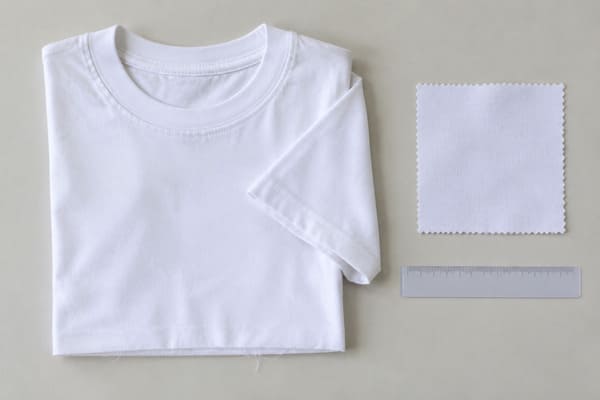
If you already have a T-shirt that matches the quality you want, providing a physical reference sample can be particularly helpful. It allows the manufacturer to assess characteristics such as the fabric weight, knit structure, surface appearance, thickness, and hand feel.
Some characteristics, including exact fiber composition and performance properties, may require additional testing to confirm.
If a physical sample is not available, describing the intended use, target market, desired fit, hand feel, and decoration method is also a good starting point.
Frequently Asked Questions
What Is the Best Fabric for Screen-Printed T-Shirts?
100% cotton and cotton-rich blends are generally suitable for screen printing, particularly when the fabric has a smooth and consistent surface.
Polyester can also be screen printed, provided that suitable inks and curing conditions are used to control dye migration.
Is 180 GSM a Good Weight for a T-Shirt?
180 gsm is a commonly used fabric weight for everyday T-shirts, promotional apparel, and retail basics.
Whether it is suitable for your product depends on the fabric construction, yarn quality, intended fit, and target market. GSM should not be used as the only indicator of fabric quality.
How Much Does a 100% Cotton T-Shirt Shrink?
There is no universal shrinkage percentage for all cotton T-shirts.
Shrinkage depends on the fabric construction, yarn, finishing, and washing conditions. Pre-shrinking can improve dimensional stability, but some dimensional change may still occur.
For bulk manufacturing, agree on an acceptable shrinkage tolerance and a corresponding washing test before approving production.
Can You Use Sublimation Printing on Cotton T-Shirts?
Conventional dye-sublimation printing is not suitable for untreated 100% cotton because sublimation dyes do not have the same affinity for cotton fibers as they do for polyester.
Other transfer systems can be used to decorate cotton, but these involve different materials or processes.
For conventional all-over sublimation printing, polyester remains the preferred fabric.
Is CVC Better Than 100% Cotton?
It depends on the intended use.
CVC can offer better dimensional stability and wrinkle resistance while retaining much of the cotton hand feel.
100% cotton may be preferred when a natural fiber composition, moisture absorption, or a particular retail positioning is more important.
What Is the Best Fabric for Oversized T-Shirts?
Midweight to heavyweight cotton jersey is commonly used for oversized T-shirts.
Fabrics in the 220–320 gsm range are often considered when a more structured streetwear silhouette is required. Lighter fabrics can also be used when a softer, more relaxed drape is preferred.
The garment pattern and fabric construction are equally important in achieving the desired oversized fit.
Conclusion
Cotton, polyester, and blended fabrics each serve different purposes in T-shirt manufacturing. The right choice depends on the intended use, hand feel, decoration method, quality requirements, and target price.
Fiber composition and GSM are useful starting points, but they should be considered together with knit structure, yarn type, and finishing.
For bulk T-shirt orders, a clear fabric specification and an approved sample provide a more reliable basis for production than choosing a fabric based on its name alone. To compare order options and see what to include in a fabric brief, visit our custom and wholesale T-shirt page.
References
-
American Association of Textile Chemists and Colorists (AATCC). TM135: Test Method for Dimensional Changes of Fabrics after Home Laundering.
-
American Association of Textile Chemists and Colorists (AATCC). TM150: Test Method for Dimensional Changes of Garments after Home Laundering.
-
Epson. SureColor F2270: Printing on Polyester and Polyester/Cotton Garments.
-
Epson. Guide to Printing on Garments.
-
Lenzing. TENCEL™ Lyocell Fibers.